LOCAL
‘Our entire economy feels it’
How Trump’s cuts to infrastructure projects are harming working people – and holding apprentices back
SPOKANE VALLEY, WA (December 12, 2025) – “You’re going to have the American dream back,” promised then-candidate Donald Trump on the campaign trail in 2024. But nearly a year into the President’s second term, his administration is failing to live up to campaign promises. In fact, the Trump administration’s actions are pushing the dream of economic security and dignity even farther out of reach for working families across the U.S.
Countless headlines have rightfully covered executive orders stripping a million federal workers of union rights. They’ve detailed legislation that defunds healthcare and nutrition programs while funneling money to massive corporations and billionaires. But less ink has been dedicated to one major way the Trump administration is ripping opportunity away from working people: by cutting federal infrastructure dollars as a whole and revoking support for clean-energy projects in particular.
Infrastructure funding is not an eye-catching topic. It’s notoriously considered a political snooze-fest. But federal infrastructure investments help fund local projects, often in combination with state funds and private investments. And local projects mean local jobs.
“If we’re not building stuff, we can’t gainfully employ those who need a job the most,” explained Matt Chapman, a union apprenticeship coordinator.
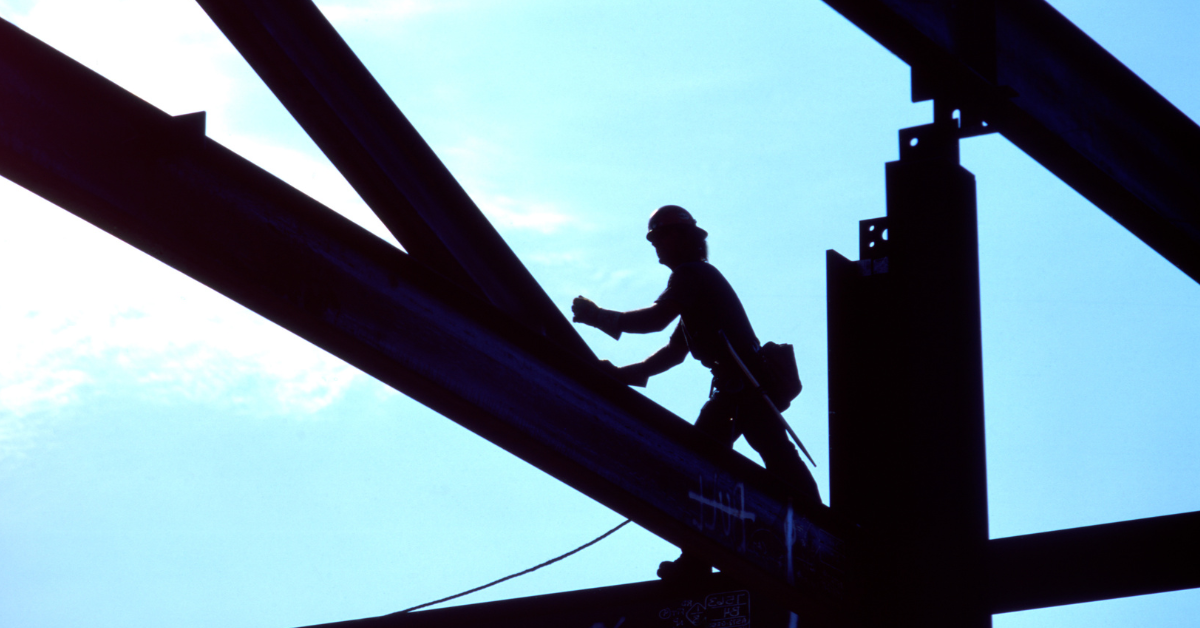

Chapman–now with the Ironworkers District Council–was working with apprentices in Ironworkers Local 14, based in the Spokane Valley, in a region of Washington state desperately in need of good-paying jobs. For generations, joining a union apprenticeship and journeying out in a trade has been one of the most secure paths to earning a wage that can support a family.
But a repeal of federal infrastructure investments has roiled the construction industry, sowing uncertainty among private investors and companies that would otherwise rely on the stability of federal dollars to undertake large-scale projects.
“We haven’t hired an apprentice applicant since March,” said Chapman in late October. “We did a pre-apprenticeship this summer and haven’t been able to put any of those apprentices to work yet.”
As funds have disappeared, work has dried up.
“We hired 76 new apprentices last year, and 25 by March of this year,” continued Chapman. “We haven’t hired any since.”
_______________
The President moved to cut infrastructure dollars early in his second term. On day one, Trump signed an executive order freezing infrastructure funds authorized by Congress through the Inflation Reduction Act (IRA) and the Infrastructure Investment and Jobs Act. Over the next 60 days, the administration made a flurry of changes to the regulatory landscape, particularly around clean energy development. In March, Trump signed an EO that rescinded guidance encouraging construction of solar and other clean energy projects. Trump’s EPA moved to cancel half of all grants made under the IRA. Construction projects, bringing thousands of jobs and opportunities for apprentices like those Matt Chapman works with, stalled.
And at the onset of the government shutdown in October, the Trump administration revoked one billion in federal investments into the Pacific Northwest Hydrogen hub–a public/private partnership to build clean-energy infrastructure in Washington, Oregon, and Montana–and billions more in funding for other clean energy projects in so-called “blue states.”
The Trump administration has made several justifications for cutting infrastructure funding, mainly that federal dollars were funding useless, inefficient, or ‘woke’ projects, projects driven by radical leftist ideology around climate change.
“Nearly $8 billion in Green New Scam funding to fuel the Left’s climate agenda is being cancelled,” tweeted Russell Vought, announcing funding cuts to the PNW Hydrogen Hub and other clean energy projects.
The Administration appears dedicated to scoring political points with funding cuts, seemingly aiming to punish Democrats in D.C. But everyday working people are paying the price.
“These federal dollars are what keep job sites open, apprentices moving through their programs, and families supported by family-wage paychecks,” said Heather Kurtenbach, Executive Secretary of the Washington State Building & Construction Trades Council. “When those funds disappear, it’s not just the big projects that stall — it’s paychecks that stop, training opportunities that dry up, and small businesses that rely on this work that start to struggle.”
Economic harm is only one cost of stalled projects. Long-term, politicizing infrastructure projects–particularly those that promote clean energy–risks the health and safety of future generations.
Floods, mudslides, wildfires, extreme heat and cold are becoming steadily more severe. Existing infrastructure needs to be shored up. New projects promoting climate resiliency are desperately needed. For Washington, economic development and growing climate resiliency are two sides of the same coin.
_______________
Some of these Trump job-cuts may well be illegal. Court challenges are underway for many of them. (In fact, a judge recently found that the administration’s moratorium on wind projects is unlawful). But while court battles and political maneuvering continues, tools sit idle and progress stalls.
“Washington is a state with immense potential for a worker-centered response to climate change,” said Washington State Labor Council President April Sims, who sits on the board of the PNW Hydrogen Association. “We have a highly skilled workforce, a robust economy, and bountiful natural resources that can fuel a clean energy transition. We had a chance to leverage this potential to tackle the two most pressing crises of our day, climate collapse and economic inequality.”
“With the swipe of a pen, the President has set us back decades,” Sims said.
But working people in Washington don’t have decades to wait around while political games play out.
“I was supposed to be getting custody of my son,” said Jose Quintero, an Ironworkers Local 14 Apprentice, in late October. Despite being ready, he hadn’t been able to get on a job in months.
“I have expectations in order to get custody of my son because all eyes are on me, and this has set me back,” Quintero continued. “This union thing is the best thing I have right now, and I can’t afford to lose it.”
Quintero isn’t alone in his anxiety. Many working families in Washington and across the U.S. are just a couple of missed paychecks away from financial disaster. Rather than taking steps to ease this stress, the Trump administration is pursuing policies that make these families’ futures all the more precarious.
“Construction workers are already feeling the pressure of rising costs, inconsistent project pipelines, and uncertainty about what’s coming next,” said Kurtenbach.
“The bottom line is simple,” she continued. “When Washington loses these funds, workers lose, and our entire economy feels it.”