NATIONAL
First-class pay for first-class service
Letter carriers are kicking off national contract negotiations with USPS for a collective bargaining agreement that prioritizes an “all-career workforce”
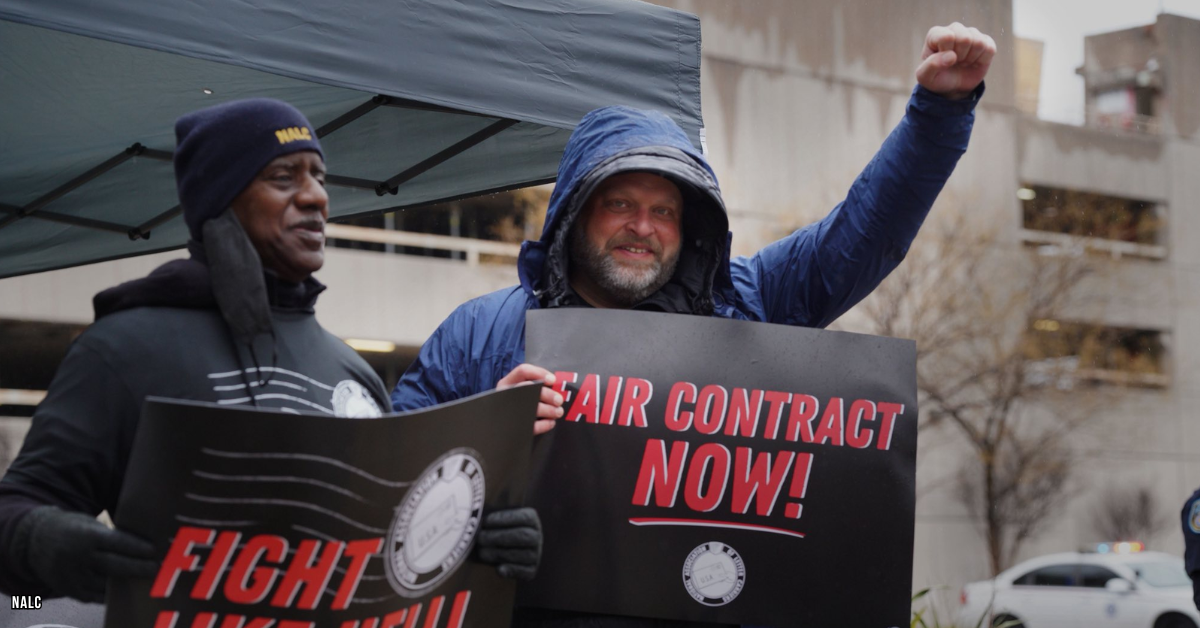
WASHINGTON, D.C. (February 23, 2026) — Letter carriers in dozens of cities across the U.S. hit the streets Sunday, rallying for a fair contract. Under the slogan “Fight Like Hell,” United States Postal Service workers represented by the National Association of Letter Carriers united in a show of strength as contract negotiations with the USPS begin this week.
NALC is razor-focused on improving wages in this contract cycle. With a rallying cry of “first-class service deserves first-class pay!,” workers are pushing for compensation that recognizes the increased workload they’re taking on to ensure quality service to communities nationwide. City letter carriers deliver medications, pension checks, packages and other essential mail to every corner of this country. They’re handling more parcels than ever before, carrying heavy loads to homes and businesses, regardless of weather conditions.

NALC President Brian Renfroe speaks at a rally in Baltimore on Sunday. Photo: NALC
This contract cycle, NALC is pushing for language that secures an “all-career workforce.” Right now, many letter carriers start out as non-career workers, earning less money and fewer benefits, even though they do the same work. As a result, NALC estimates about 55% of non-career letter carriers leave the job within their first year. To retain a dedicated workforce, NALC is pushing for full benefits for every letter carrier from the start, with higher pay and a fair workroom floor.
Washington letter carriers rallied at more than a half-dozen locations from Spokane to Bellingham on Sunday. Washington State Labor Council, AFL-CIO President April Sims joined NALC members at the rally in Seattle, sharing a message of solidarity from Washington’s labor movement.
“When we defend good union jobs at the Postal Service, we defend the idea that public service should be delivered by trained, fairly compensated workers—not some stripped down, privatized, or hollowed out model,” said Sims. “That’s why the labor movement stands with you, from building trades to teachers, nurses to grocery workers, machinists to public employees.”
“When one group of workers raises the standard, it lifts the floor for everyone,” Sims continued.
Postal carriers with @NALC_National , a national union of 300,000, have launched their contract campaign. Carriers deliver no matter what – working long routes through nearly any weather. Now they’re demanding USPS pay a living wage and ensure stability for the postal service. pic.twitter.com/ykF7lEBF0M
— On the Line (@laborontheline) February 23, 2026