NATIONAL
Work zone safety: solidarity in action
‘Work Zone Awareness Week’ is a reminder to keep safety front of mind as road construction kicks into high gear over the summer months
(April 21, 2026) — If you check out a list of the most dangerous jobs in the U.S., some will come as no surprise — the risks of underground mining aren’t hard to imagine. But you might be shocked by one of the jobs on such lists: flaggers, the folks who help navigate the public around work zones, and other roadside construction workers. That danger probably doesn’t come as a surprise if you’ve ever experienced working on a road project mere feet from massive, speeding vehicles.
Every year, more than 700 people are killed and more than 30,000 people are injured in work zones across the U.S., figures that encompass both workers and motorists. Those staggering numbers have lead to the establishment of Work Zone Awareness Week, an annual effort to call attention to the dangers of distracted and impaired driving and a reminder that slowing down and paying attention when behind the wheel can be a literal lifesaver — and act of solidarity with fellow workers. Unions like the Laborers International Union of North America are raising awareness online, putting out a simple message: Slow down, pay attention, save lives. 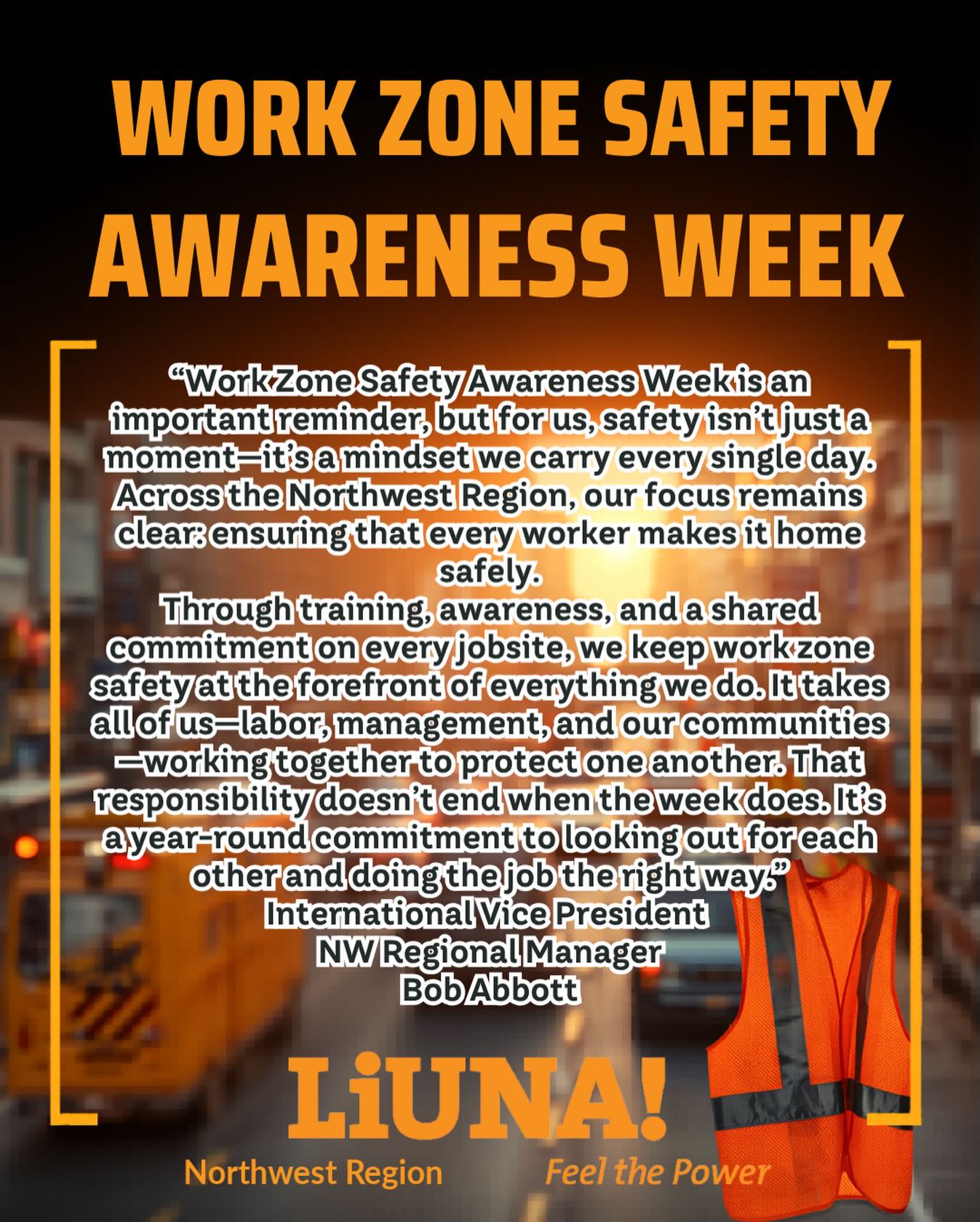

“Work Zone Safety/Awareness Week is an important reminder, but for us, safety isn’t just a moment-it’s a mindset we carry every single day. Across the Northwest Region, our focus remains clear: ensuring that every worker makes it home safely,” said LiUNA International Vice President & NW Regional Manager Bob Abbott in a social media post. “It’s a year-round commitment to looking out for each other and doing the job the right way.”
In Washington, there were 1,557 work zone crashes in 2025, nine of them fatal; the top reasons for crashes were drivers following too closely, speeding, or driving while distracted. Earlier this month, the Washington State Department of Transportation commemorated 61 workers who have been killed in Washington work zones since 1950. In a Facebook post, WSDOT shared stories of two workers who had been recently injured:
“Maintenance worker Josh Quilici spoke of how a semi-truck struck his plow on I-90 near Kittitas in January — the impact flipped the plow. ‘My thoughts quickly went to my family,’ Josh said. ‘I asked myself if I would be ok, if I would make it home to my wife and kids.’ With the help of people who stopped to help, Josh crawled out of the passenger side of his overturned plow. He returned to work a few weeks later, but he’s still dealing with lingering pain from the impact. Maintenance worker Dave Hays stood in front of a ruined truck-mounted attenuator — folded like an accordion — as he described how a distracted driver smashed into his vehicle while Dave was providing traffic control for an earlier fatal collision on I-5 in Clark County. Dave was hospitalized and has since returned to work.”

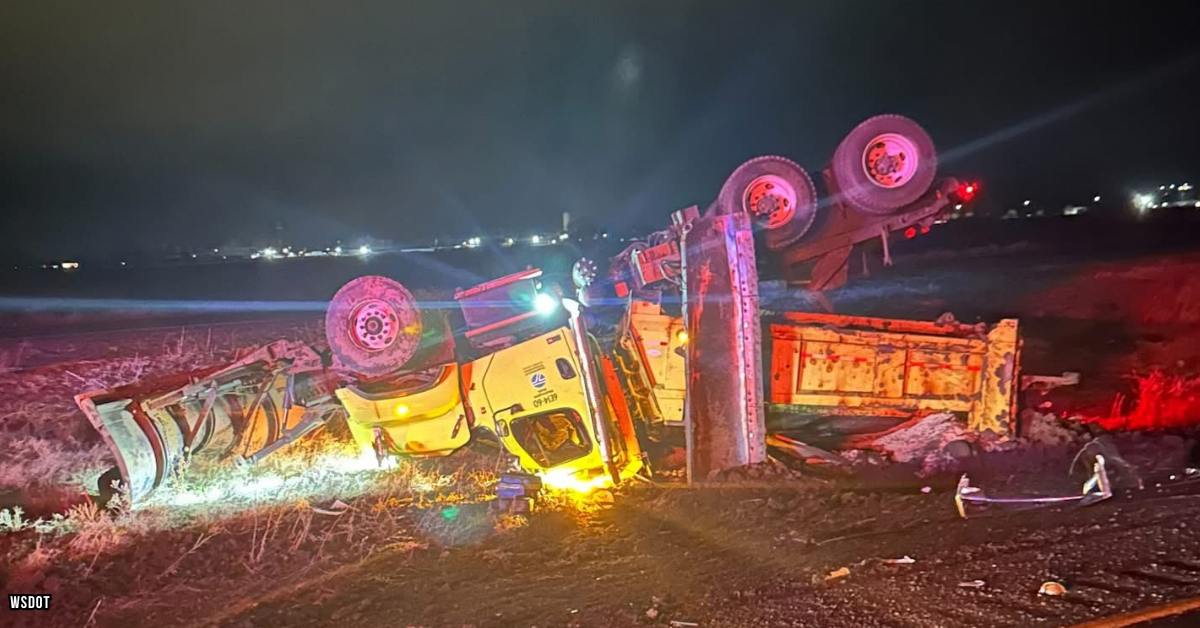
The aftermath of the collision that injured WSDOT worker Josh Quilici. Photo: WSDOT via Facebook.
Washington has seen some success in reducing unsafe driving near work zones through a speed camera program that’s been in place at some high-risk sites throughout the state. “On I-5 near JBLM, more than 60% of drivers were speeding through the work zone before cameras were deployed. The percentage dropped to as low as 30% during enforcement. The cameras were also used to help the I-405/Brickyard to SR 527 Improvement Project during work on State Route 522. Speeds dropped during enforcement. In the months after deployments stopped, the construction project saw a more than 20% reduction in the number of vehicles speeding through that part of the work zone,” announced WSDOT in a press release.
Work Zone Awareness Week is a reminder that one way we can put our solidarity with our fellow workers on the road into action is to slow down, drive carefully, and do our part to ensure we all make it home safely at the end of the day.