W.S.L.C.
2026 WSLC Convention: Day 2
Highlights from Minnesota AFL-CIO President Bernie Burnham, Oregon AFL-CIO Secretary Treasurer Sarina Roher, Washington Secretary of State Steve Hobbs, and more

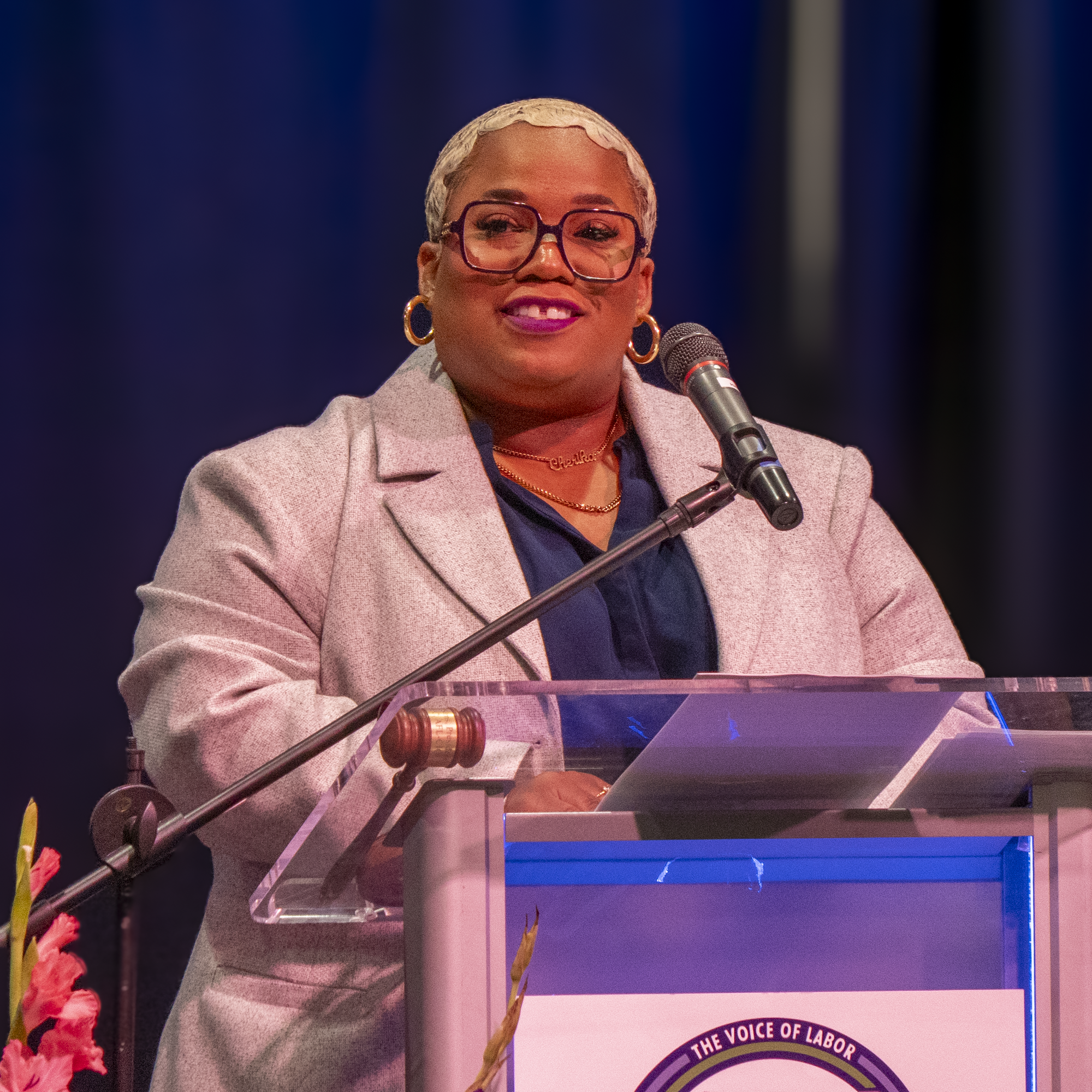
WSLC Secretary Treasurer Cherika Carter.
WENATCHEE, WA (July 23, 2026) — Focused on defending democracy and fighting for a worker-centered economy, day two of the 2026 Washington State Labor Council Constitutional Convention kicked off with powerful remarks from Secretary Treasurer Cherika Carter.
“History has never been written by people who accepted someone else’s vision for the future,” said Carter. “It has been written by workers who stood together and insisted on something better. We don’t wait for billionaires to decide. We don’t wait for algorithms to decide. We don’t wait for politicians to decide. Workers decide. We decide what dignity at work looks like. We decide what our economy values. We decide what democracy demands.”
View Carter’s full remarks online at TVW starting at 00:07:15.
Minnesota AFL-CIO President Bernie Burnham offered a keynote digging into lessons learned from the federal immigration surge that targeted working people in the Twin Cities area earlier this year.
“January and February of this year was the darkest period of all my years of living,” Burnham said, detailing how agents snatched parents from cars, leaving kids in the back seat; showed up at workplaces targeting people of color; detained and disappeared folks as they clocked in at the airport; and intimidated educators and parents trying to keep schools safe for children. Burnham detailed how long-nurtured relationships between labor, community, and faith groups built a coalition that fought back against the violent surge. Of the federal administration, Burnham said:

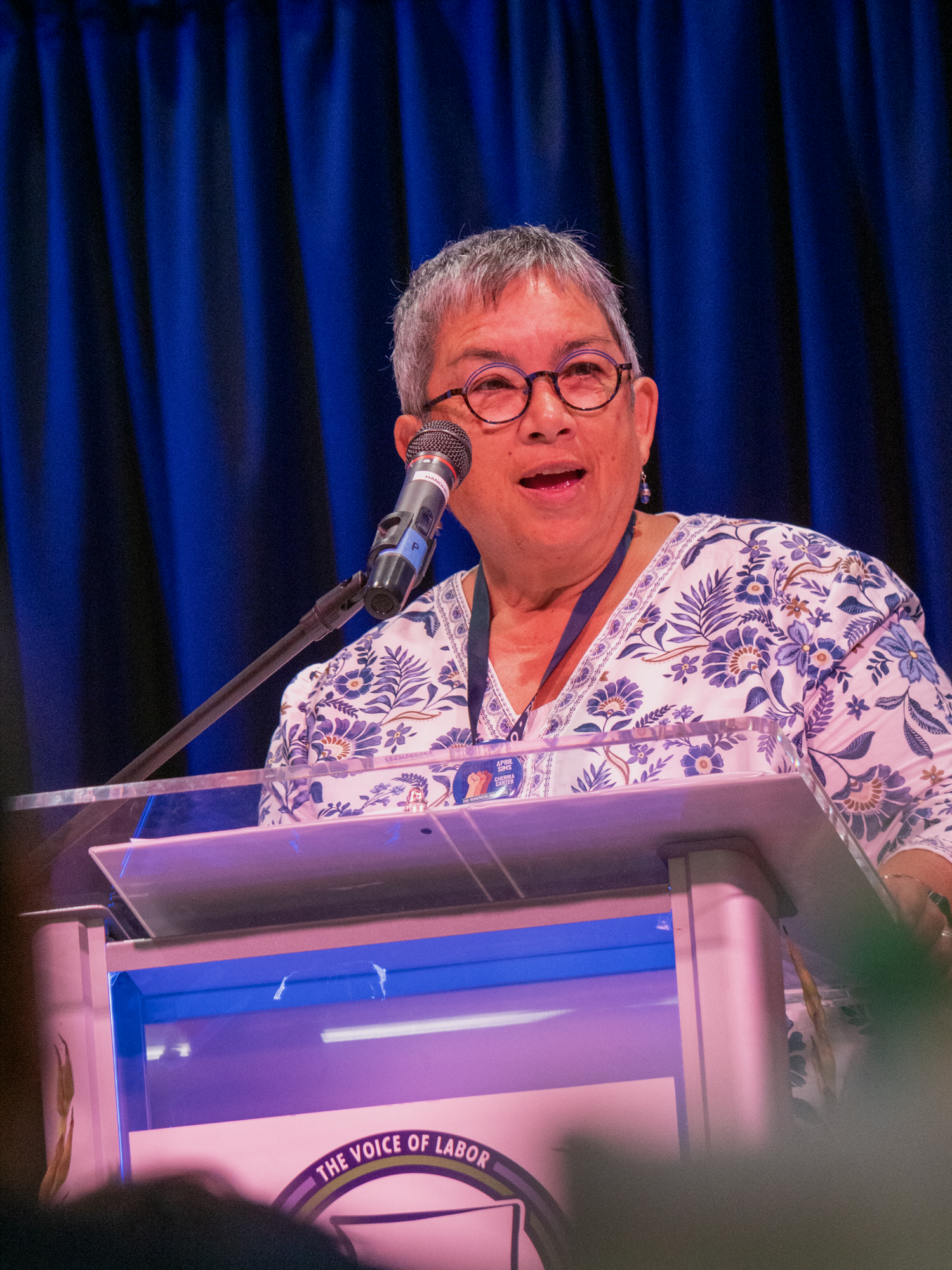
Minnesota AFL-CIO President Bernie Bernham.
“Donald Trump, Stephen Miller, and Kristi Noem thought ‘Minnesota Nice’ meant we would stand by quietly while federal agents disappeared our friends, neighbors, and coworkers. They thought in a state that is nearly 80% white, they could divide us based on what we look like, where we were born, or how we pray. They thought we would retreat into fear after they gunned down Renée Good and our union brother Alex Pretti. They thought if they could get away with this terror in Minnesota, they could get away with it anywhere. But they mistook kindness for weakness.”
Bernham’s full keynote can be viewed online at TVW at 00:25:15
Washington Secretary of State Steve Hobbs took the stage next to dig deeper into what it means to defend our democracy, not just to exercise our democratic rights.
“We have spent the majority of the time reminding you when to vote,” Hobbs mused, explaining the many checks and balances in Washington’s vote-by-mail system. “We haven’t told you about the boring part of the elections.”
Hobbs and his staff are working diligently to grow that understanding of the “boring” nuts ad bolts of elections leading into the midterms, pushing back against rampant disinformation aimed at undercutting confidence in our democracy.
View Hobbs’ full remarks online at TVW starting at 00:54;50.

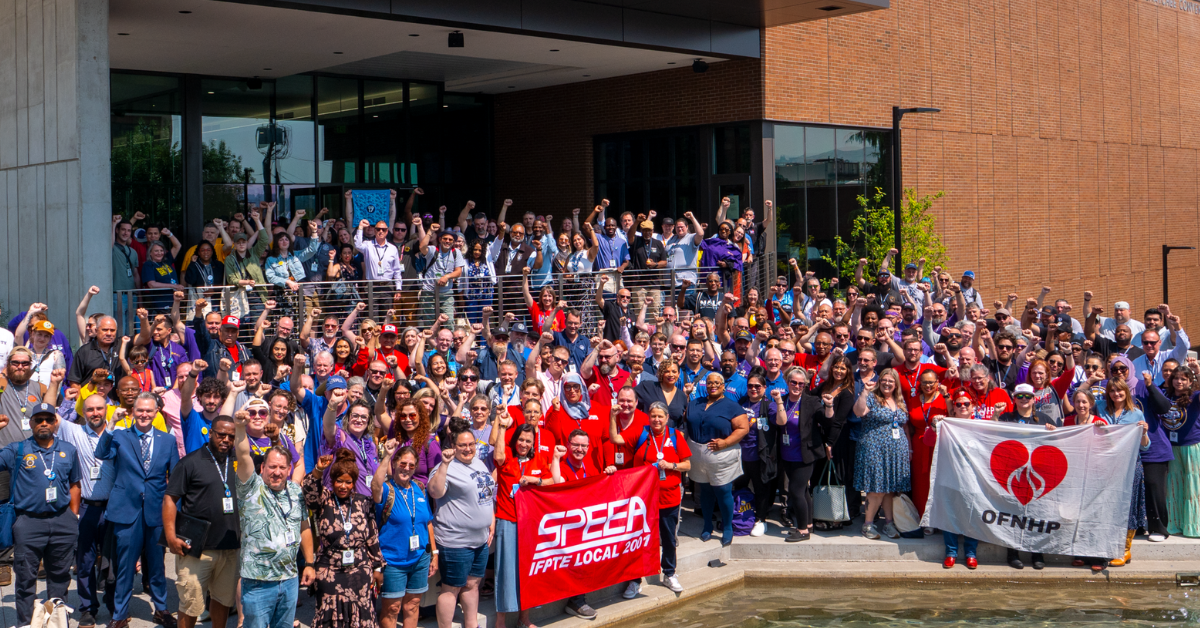
Delegates to the 2026 WSLC Constitutional Convention.
A panel moderated by WSLC President Sims dug deeper into the role every union member can play in defending that democracy. Fina Ormond, from the Secretary of State’s office, uplifted how essential trusted messengers are as midterms approach.
“Come to the Secretary of State’s website…to help you understand [elections],” said Ormond. “And your local county offices…and affiliate organizations like your union.”
Joe Montemayor (AFL-CIO) echoed the powerful role unions can play helping working people cut through disinformation and maintain trust in our elections while Maureen Johnson from the Washington Attorney General’s office cautioned that far too often, algorithms feed us distortion, not facts. Social media is “like looking in a funhouse mirror,” said Johnson.
View the full panel online at TVW starting at 01:05:20.
Sarina Roher, RN. Secretary Treasurer of the Oregon AFL-CIO, shared her union story, from becoming a mother at 17, the loss of a child leading her to a career in nursing, and how her union having her back motivated her into leadership.
“In those darkest days, another group of people carried me: my nurses. They held my hand, they wiped my tears, and they comforted my family when I just couldn’t,” said Roher. When she started working at Kaiser Permanente, she faced an abusive supervisor. But she didn’t face them alone.
“One day, someone said three very simple words to me that changed my life: call your steward,” said Roher. “Within a few months everything changed. Once again, I discovered there was another way. This way didn’t include that supervisor, though. She was asked to resign. That was the first time I experienced what collective power really looks like.”
View Roher’s full remarks online at TVW starting at 01:46:10
A panel digging into future of work and worker-first AI strategies closed out morning programming, featuring Kati Durkin (Washington Federation of State Employees), Jessica Hauffe (Washington State Nurses Association), Matt Lim (Teamsters Local 117), and Crystal Weise (AFL-CIO).
Durkin shared WFSE’s fight to change the law and end a “tiered system of importance” between public and private workers by empowering public employees to bargain over the implementation of AI tools in the workplace, a right private employees already have in Washington. Lim uplifted Teamsters Local 117’s emphasis on addressing AI in collective bargaining now, even in workplaces where isn’t yet widely in use.
“AI is already here, and once it’s implemented, you’re going to be bargaining from behind,” said Lim.
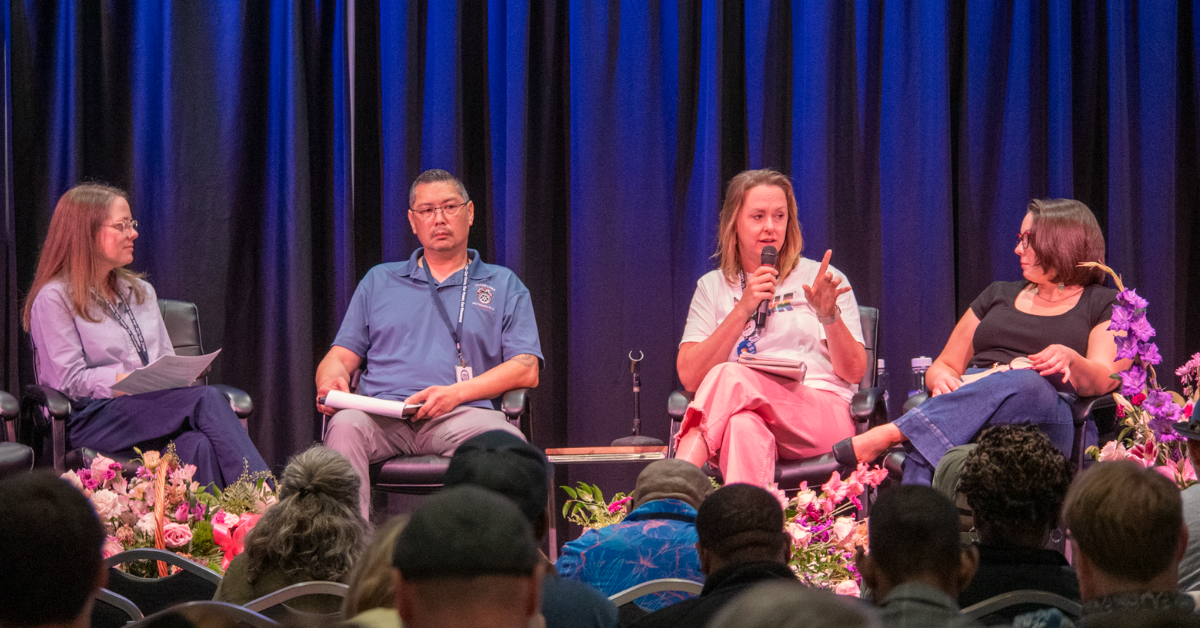
From left: Crystal Weise (AFL-CIO), Matt Lim (Teamsters Local 117), Jessica Hauffe (WSNA), Kati Durkin (WFSE)
Hauffe talked about WSNA’s work secure safeguards on the use of AI in healthcare, elevating how vital trust is in the relationship between patients and providers, how healthcare workers prize professional integrity, and why human beings will always be the cornerstone of quality healthcare.
“AI cannot be held accountable if something goes wrong,” said Hauffe.
WSNA successfully advocated for legisilation this past session to prevent healthcare entities from calling AI tools ‘nurses,’ a decisive win that Hauffe sees as just the beginning of the work needed to ensure AI in healthcare is leveraged to benefit people.
“Public policy is setting the floor,and collective bargaining is setting the ceiling,” said Hauffe.
View the full panel online at TVW starting at 02:02:50.
Wednesday’s session also recognized members of the union family for their leadership and diligence building power for working people. MN AFL-CIO President Bernham presented the Power to the People group award to Casa Latina, for their work passing the Domestic Worker Bill of Rights (HB 2355, D-Thomas), a moral and policy victory extending labor protections to workers in private homes who have long been excluded from the protections of the National Labor Relations Act and other labor laws.
Erin Haick (SEIU Local 925) received the individual Power to the People award for carrying the unseen, unglamorous, but vital work that has made possible countless legislative and political victories for Washington’s working families. Mike Andrew (National Writers Union) received the individual Mother Jones award for his leadership with Pride at Work and the Puget Sound Advocates for Retirement Action.
The Association of Western Pulp and Paper Workers received the group Mother Jones award, recognizing their work supporting members in the aftermath of the Longview Nippon disaster, embodying the famous words of Mother Jones: “Mourn the dead, and fight like hell for the living.”
Delegates reconvene Thursday, July 23 at 9:00 a.m. for the final day of the 2026 WSLC Constitutional Convention.