OPINION
Behavioral Health (Not Billionaires) Needs Funding: NO on I-645
By MIKE YESTRAMSKI
(October 29, 2026) — Most of us have heard what happens when someone with a mental health challenge goes untreated or has a relapse. We’ve read the headlines, felt horrified and ashamed that our system failed, and hoped it would never happen again.
As a psychiatric social worker at Western State Hospital, I’ve been a part of those stories. But I want to share one about when things go right — because they can when we make investments in behavioral health services and make sure sick people get the immediate care and ongoing support they need.

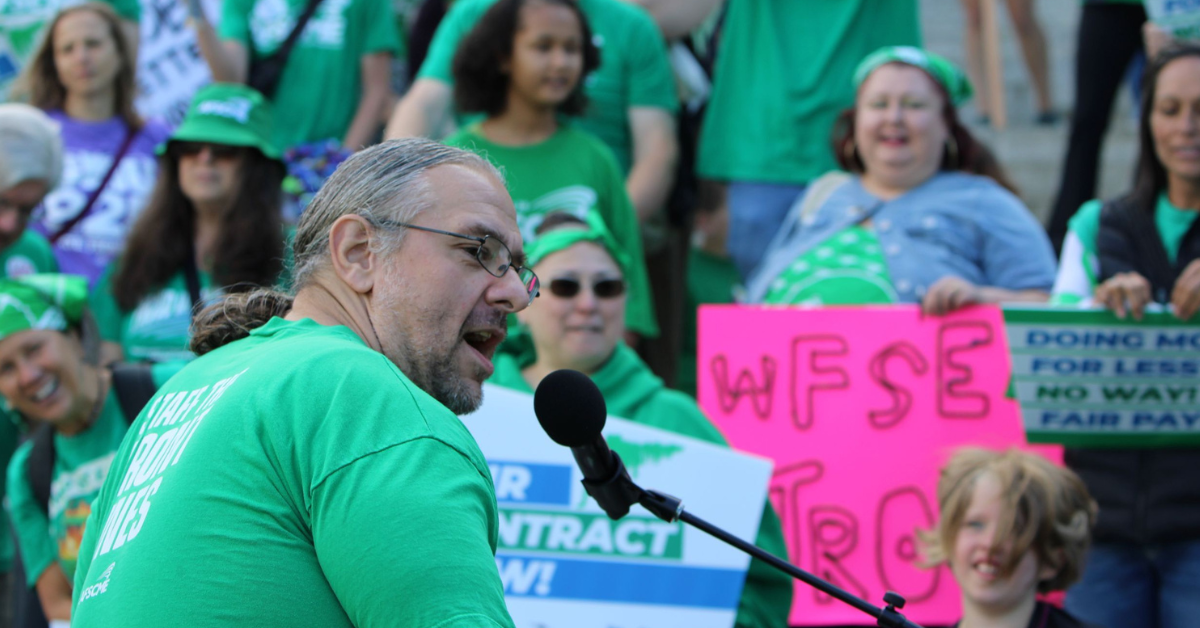
Yestramski speaks at a rally at the state capitol building. Photo: WFSE
As part of the Civil Discharge Team, I help folks who are not involved with the justice system transition back into their communities once they are well enough to do so. Along with my colleagues who are social workers, RNs, and other mental health professionals, we work with the patient to make sure they are truly prepared for discharge. That involves planning where they will live, whether it’s with their family, in an adult home or group home, or independently.
No matter where a patient lands after discharge, a comprehensive plan for wrap-around services is key to their success. We make sure they have Medicaid or Medicare coverage, can make and get to doctors appointments, and connect them to other state agencies for support, if they need it.
Too often, funding for these services are cut and people suffer. Sometimes the pain extends beyond the patient to another member of the community. Those are the headlines we all dread. But when we have the resources, we can do really great work.
Let me tell you about a patient I’ll call Jake, who had been in Western State for decades. About eight years ago, he benefited from the expansion of a program that provides community support to people leaving our care. He was nervous about moving out, but we assured him we’d be able to assist him in the transition, intervene if he had a relapse, and monitor him as he settled back into the community. He’s still there. I get messages from him occasionally, often on Friday afternoon, when he’s enjoying his weekly ritual of sitting down with a bucket of chicken to watch his favorite TV shows. These are simple things we might take for granted, but it’s small measures of freedom and agency that he enjoys after being institutionalized.
State employees like me don’t go into this kind of work expecting to get rich. We do it because we care and want to help patients like Jake. We are building the kinds of communities we want to live in and creating a Washington where everyone has access to the tools and care they need, whether they live at Western State as a patient, as a parent in a small town, or a business owner in the city.
Unfortunately, our jobs and the services we deliver are first on the chopping block when the state budget falls short. We live with the consequences of those decisions. So do our patients.
This kind of budget shortfall happens year after year because our tax code is rigged in favor of the rich. The richer you are, the less of your income you pay. The poorer you are, the more you pay.
But there’s a way out of this doom loop of cutting services and programs used by most everyday Washingtonians: Vote NO on Initiative 645, the billionaire-backed effort to repeal the Millionaires’ Tax. Get your ballot in ASAP and don’t wait for November 3rd.
The Millionaires’ Tax is a chance to make our tax system more fair for all of us and to finally set up a future of revenue in our state that keeps our core programs funded.
Most of us believe the wealthy should pay what they truly owe in taxes. The Millionaires’ Tax is the way to do that. When we fund services – from behavioral health to school nurses, rural dental clinics to child care supports – people get the care they need.
I believe Washingtonians will do the right thing.
Two years ago, voters soundly rejected another billionaire-backed referendum, I-2109, by a nearly 2:1 ratio. It would have repealed the new capital gains excise tax paid only by the richest 4,000 households in our state.
Like I-645, I-2109 was propelled to the ballot by a massive misinformation campaign that painted the effort as an economic lifeline for everyday Washingtonians—not as a tax cut for the rich. Voters were not fooled, and it’s a good thing they weren’t.
So when you get your ballot this November, think of Jake and his bucket of chicken. Think of kids running around, full of energy, ready to learn thanks to free breakfast and lunch in all public schools, paid for by the Millionaires’ Tax. Then vote NO on I-645.
Mike Yestramski is a social worker and President of the Washington Federation of State Employees.