OPINION
What does a just world look like?
WSLC President April Sims reflects on 2025 and shares her vision for Washington’s labor movement in the new year and beyond
by APRIL SIMS
(December 18, 2025) — As 2025 comes to a close, I’ve been taking stock of the work we’ve done together, the obstacles we’ve faced, and the moments that reminded me why our movement matters. This year has stretched all of us, yet it has also revealed, again and again, the strength and imagination of working people in Washington. As I look ahead, I feel a mix of realism and hope—realism about what we’re up against, and hope rooted in everything we’ve proven we can accomplish when we stand together. Moving into 2026, I’m thinking about what becomes possible when we commit to building the world we actually want, not simply accepting the one we’ve inherited.
What does a just world look like to you? Picture it for a moment—no need to close your eyes or you’ll miss the rest of this column. What do you see?
Chances are, it doesn’t look much like the world we’re living in. This year made clear how far we remain from true justice. Since January, we’ve watched inequality deepen and seen attack after attack on workers, families, and communities. It’s easy to feel overwhelmed by the scale of it.
But staying in that place doesn’t honor the working people who show up every day with the belief that a better world is possible. Even in a difficult year, our movement turned hope into action and won real gains.
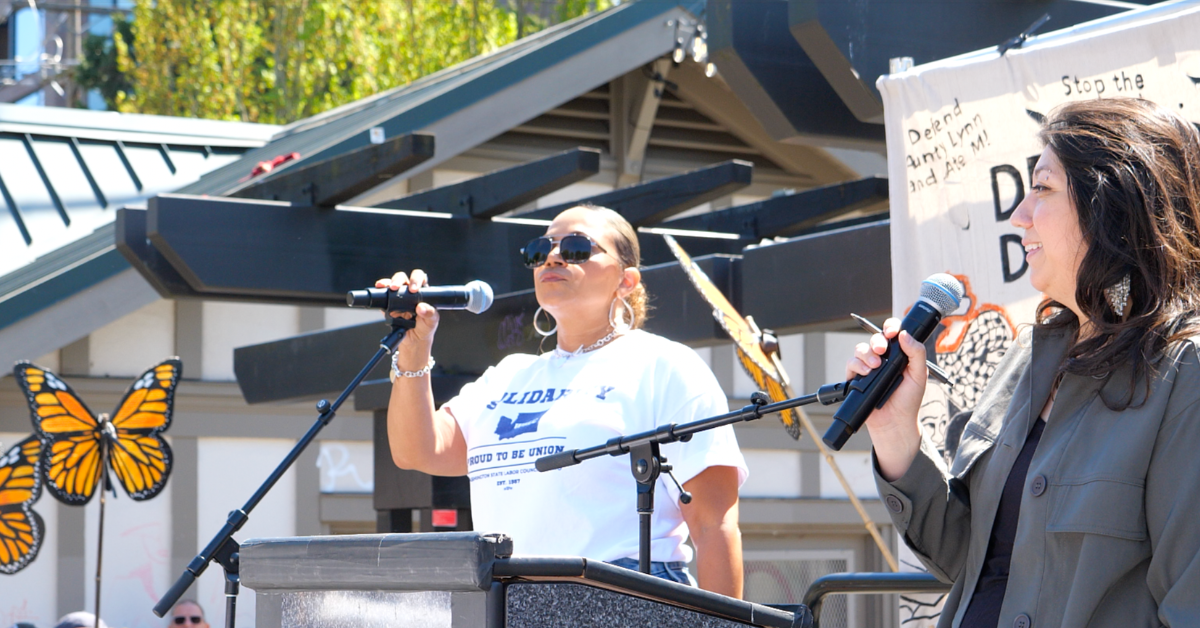
Sims speaks at the Seattle May Day march and rally.
In the state legislature, we strengthened workers’ power—expanding unemployment access for striking workers, tightening child labor laws, and ensuring the state budget relied on taxes from big business rather than extreme cuts to public programs or public workers’ pay.
We mobilized to defend union siblings targeted by ICE, refusing to let our loved ones disappear into the detention system. We built deeper partnerships with community organizations defending immigrant communities. From rallies at the Northwest Detention Center to marches through Seattle, our movement made it unmistakably clear: an injury to one is an injury to all.
We also kept up sustained protest—from community-led rallies like Hands Off and No Kings to the broad demonstrations of worker power on May Day and Labor Day. Across Washington, people exercised the right to protest, rejecting division from a hostile federal administration and choosing unity and collective action instead.
Because of that unity, we won strong contracts and organized more workers. Healthcare workers in Bellingham and Vancouver and educators in Southwest Washington and Mead secured major victories through strikes. Starbucks workers led the longest ULP strike in the company’s history, boosting momentum across our movement. Strike threats brought agreements for Costco Teamsters, King County security guards, SEA airport workers, grocery workers statewide, hotel workers in Seattle, care workers in Bellingham, and educators in Redmond. And unions continued to grow—adding grocery workers in Tacoma, transit and nonprofit workers in Seattle, healthcare workers in Wenatchee, service workers in Olympia and King County, and education staff at the University of Washington.
But acknowledging our wins doesn’t mean ignoring the scale of the challenges ahead. The anti-worker regime in D.C. is moving fast to reshape the country in ways that weaken workers, tear apart immigrant families, and hand even more power to corporations and billionaires. At nearly every turn, the federal government has chosen to make life harder for working people.

Sims speaking at a rally at the NW Detention Center in support of Machinist brother Max Londonio.
These challenges aren’t easy to overcome. As we look to 2026, I’m reminded of the lessons of the past five years. We began this decade in a global pandemic that disrupted everything. In that disruption we had a chance to reimagine our systems and rethink work. In many ways, we didn’t fully seize that opportunity. But we can learn from it: we don’t need to rebuild systems that weren’t serving us anyway. We can imagine better—for ourselves, our families, and the generations to come.
The world we live in now was imagined once, too. People imagined a system that blocks opportunity, denies dignity, and concentrates power in the hands of a wealthy few. That system isn’t natural or inevitable. It was built—and we can unbuild it and rebuild it to serve working people.
So, what does a just world look like to me?
It’s a world where workers have the dignity that comes from working hard and not breaking our backs to take care of their families.
A world where families are safe and whole.
A world where we have the breathing room to embrace creativity, curiosity, and rest.
A world where opportunity is shared and respect is mutual.
This vision has been the rallying cry of organized labor since our beginning. For more than a century, it has inspired working people to join together in unions and organize.
Politicians think in short cycles—two years to an election, four years in a term. Our movement thinks in generations. We stand on the shoulders of the workers who came before us, who endured challenges like ours and never stopped fighting to claim their power.
As we enter 2026, we must claim the power that is our legacy as unionists.
Together, through our actions, workers decide the world we will live in.
April Sims is President of the Washington State Labor Council, AFL-CIO. Learn more about the Council at wslc.org.


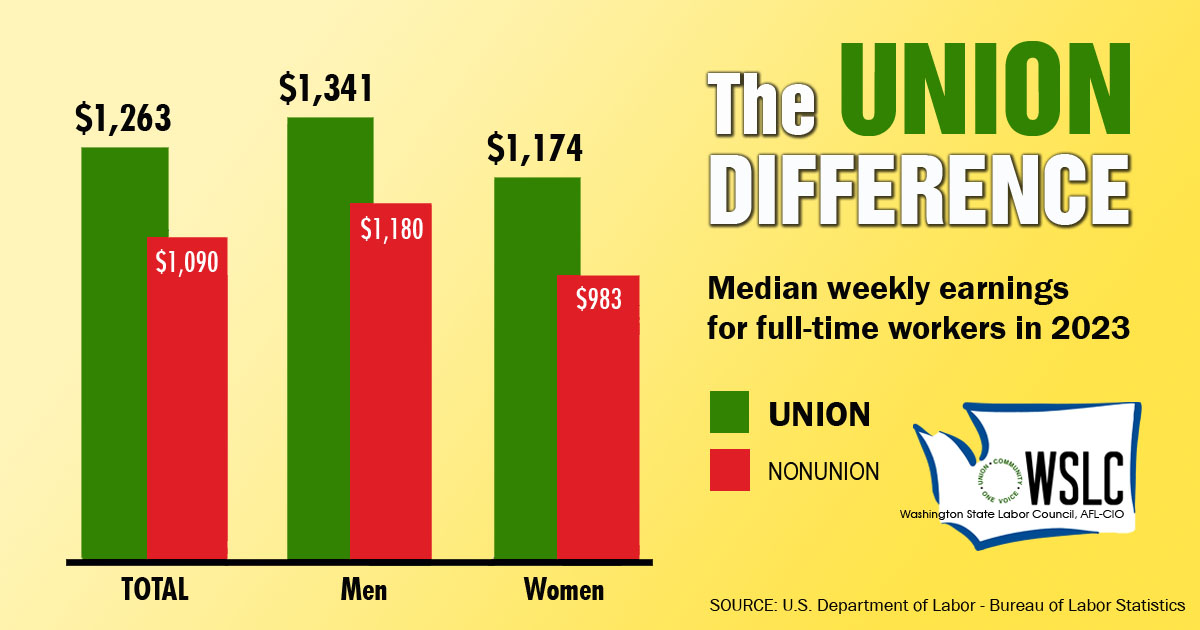
CHECK OUT THE UNION DIFFERENCE in Washington: higher wages, affordable health and dental care, job and retirement security.
FIND OUT HOW TO JOIN TOGETHER with your co-workers to negotiate for better wages, benefits, and a voice at work. Or go ahead and contact a union organizer today!