LOCAL
Seattle Children’s nurses authorize strike
Unless management agrees to a fair contract, nurses could strike Seattle Children’s Hospital for the first time in more than 100 years
SEATTLE, WA (January 8, 2026) — Nurses at Seattle Children’s Hospital voted overwhelmingly in late December to authorize a strike after months of negotiations and efforts from healthcare workers, local community and politicians to reach a contract agreement with hospital administration. If nurses are forced to strike, it will be the first strike in the hospital’s 118-year history, per the nurses’ union, Washington State Nurses Association. The nurses’ contract expired on Nov. 21.
“We don’t want a labor dispute. We don’t want to strike. We want a fair contract that protects nurses’ legal rights, ensures patient safety, compensates nurses injured by workplace violence, and maintains the union strength that has made this institution exceptional,” the nurses wrote in a Seattle Times ad in November.
Throughout 33 bargaining sessions, SCH administration has maintained an oppositional stance to the nurses providing direct care to patients. Administrators brought in notorious anti-union law firm Morgan Lewis to negotiate against the nurses, adopting a scorched-earth approach to bargaining.

Nurses held an informational picket at Seattle Children’s Hospital in September, 2025.
“Seattle Children’s transformed a historically collaborative, respectful relationship with its nurses into bargaining fraught with anti-union attacks and proposals that undermine the hospital’s stated values,” stated WSNA in a press release announcing the strike vote.
Nurses contract proposals are straightforward, seeking to remedy problems at the hospital. Each of their proposals would improve patient care, as well as their own working conditions.
Pay is a major issue. Seattle Children’s is ranked as a top 10 pediatric hospital in the U.S. with a gross revenue of $4,185,415,000 in 2024, yet pays sub-market wages. (The hospital also has an endowment of more than $1.9 billion.) Nurses also want improvements to premiums for night-shift work. These pay issues impact patient care. Nursing is a teaching profession; new nurses learn from their more experienced counterparts on shift. But without fair pay, it’s difficult to recruit and retain experienced nurses. As a result, currently, 50 percent of night shift nurses have less than three years’ experience.
Per the union: “when the nurse showing you how to do something has only six months more experience than you do, this can put patient safety at risk.”
Leave and breaks are another key issue. Most nurses have less than 24 hours sick leave available, and missed meal and rest breaks are common. This puts incredible strain on nurses’ physical wellbeing, nurses who are often working with medically vulnerable patients. But without adequate leave, nurses are left with few options but to work sick; for a child undergoing cancer treatment, for example, sick caretakers can have devastating consequences for that patient’s health.
And now, SCH administration has also forced nurses to fight unfair labor practices, including those resulting from the hospital’s antagonistic approach to bargaining.
“WSNA has filed several unfair labor practice charges against Seattle Children’s for threatening retaliation against union supporters, refusing to allow nurses with children to observe bargaining, and unilaterally changing working conditions,” said the union in a statement.
Nurses are still seeking to bargain contract terms even as they prepare for a potential strike. Per WSNA, if the hospital does not come forward with a fair contract, the bargaining team will seek approval from the union’s Labor Executive Council to give the hospital 10 days’ notice of a strike, as required by law.



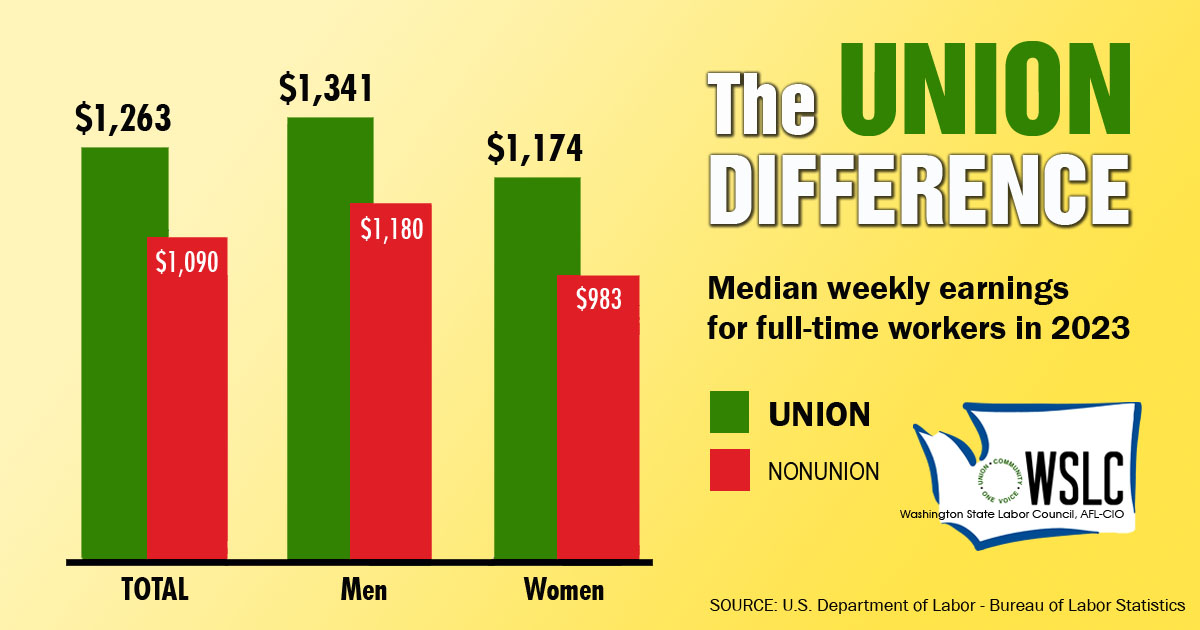
CHECK OUT THE UNION DIFFERENCE in Washington: higher wages, affordable health and dental care, job and retirement security.
FIND OUT HOW TO JOIN TOGETHER with your co-workers to negotiate for better wages, benefits, and a voice at work. Or go ahead and contact a union organizer today!