STATE GOVERNMENT
The real childcare crisis
Providers, educators, and allies held a day of action at the state capitol pushing for passage of a childcare workforce standards bill
OLYMPIA, WA (January 21, 2026) — It costs more to send your kid to childcare than to the University of Washington. That’s the finding from a 2023 report detailing the average annual cost of child care in the state, roughly $14,000 every year. Yet despite this high price tag for parents, childcare providers themselves often make poverty wages. SEIU Local 925, a union representing childcare providers and early educators, estimates that Washington’s childcare workers make half the statewide average hourly pay, $19.55 compared to $39.21. Low wages and high costs are contributing to a growing crisis, as families struggle to afford care and providers struggle to make ends meet on low wages.
But that’s not the childcare crisis in the news.
“At a time when unfounded allegations of fraud and the ongoing ICE deportation campaign are targeting child care providers, early educators are calling on state lawmakers to step up and address the real drivers of the child care crisis,” stated SEIU Local 925 in a news release announcing their day of action to urge legislators to take action.
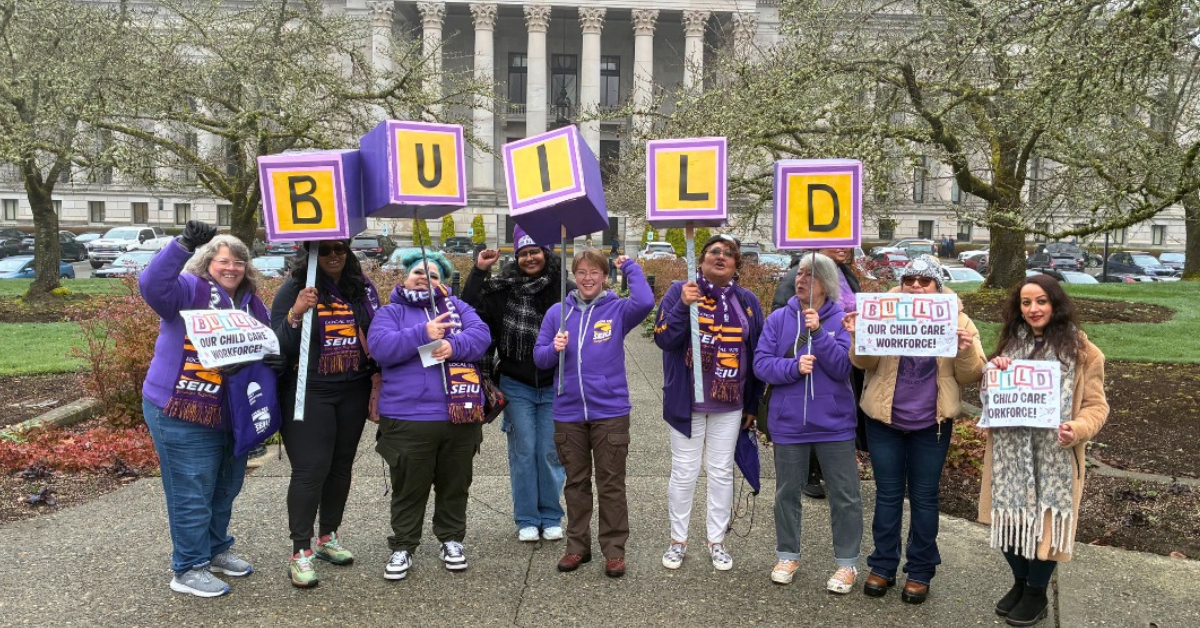
Childcare providers and early educators organized with SEIU Local 925 pose for a photo in front of the state capitol. Photo: SEIU 925
Providers and advocates have a solution to this real crisis in mind. This past Monday, providers, early educators, and allies gathered at the State Capitol to share with their legislators why establishing a Childcare Workforce Standards Board is so essential. HB 1128 (Rep. Fosse) and companion bill SB 5062 (Sen. Stanford) would create this avenue for collaboration between providers, parents, and other stakeholders, and set minimum standards for compensation and other employment conditions of child care workers. Legislation would also make it unlawful for employers to pay child care providers less than the standard set by the board, or violate other employment conditions the board has established.
Local 925 estimates there are roughly 20,000 early educators working in more than 6,000 child care facilities in Washington. These providers are primarily women (nationally, 97% of providers are women), mostly women of color, and among the lowest paid workers in the state, per the union. Beyond low wages, more than 80% of childcare workers say they’ve skipped lunch breaks or worked while sick due to understaffing. Combined, the stress of making ends meet on low pay and burning out without breaks is pushing childcare workers out of the industry, worsening the existing childcare crisis for working families.
As the legislative session continues, childcare workers and advocates are urging legislators to take action to address the real drivers of the childcare crisis, providing much-needed relief to providers and parents alike.
Supporters can use this email action from SEIU 925 to urge their legislators to support creation of the Childcare Workforce Standards Board.



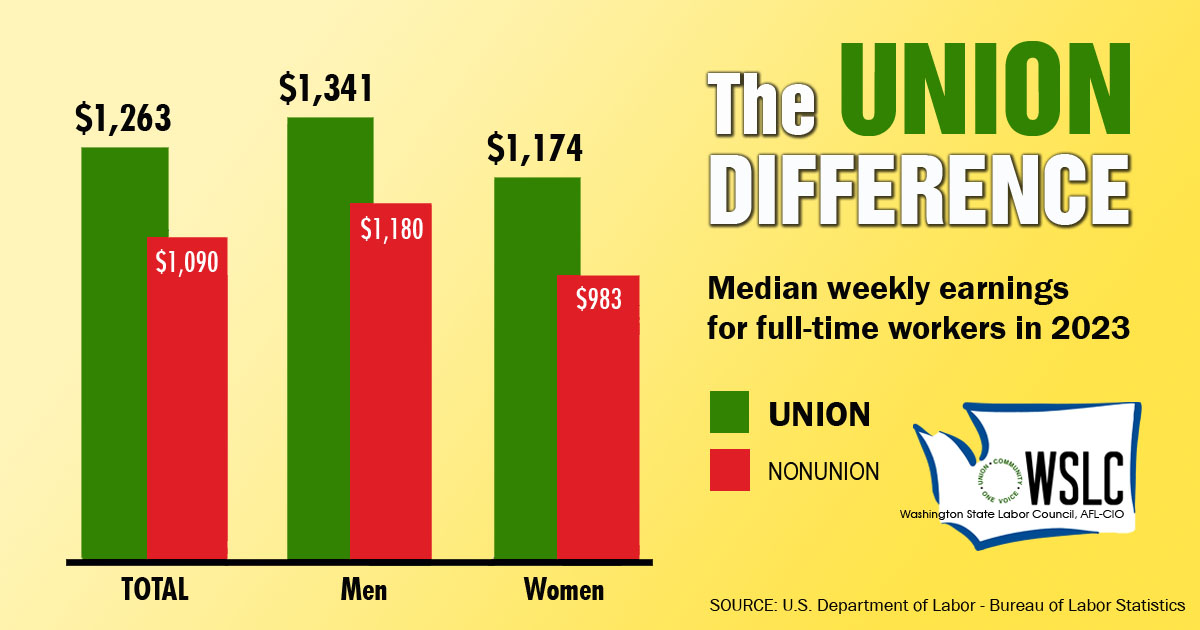
CHECK OUT THE UNION DIFFERENCE in Washington: higher wages, affordable health and dental care, job and retirement security.
FIND OUT HOW TO JOIN TOGETHER with your co-workers to negotiate for better wages, benefits, and a voice at work. Or go ahead and contact a union organizer today!