NEWS ROUNDUP
‘Hardly radical’ tax | Energy job barriers | 1941 general strike
Thursday, February 26, 2026
LOCAL

► From the Daily UW — UW launches AI initiative as faculty raises concerns, Purple rollout delayed — During the keynote, at least two attendees displayed laptop screens facing the audience, reading “AI SUCKS” and “I HATE AI.” One attendee also held a printed flyer objecting to the university’s AI efforts that included a QR code. Dissent towards UW’s new AI programming has not been limited to the event. On Thursday, Feb. 19, an email was circulated to the American Association of University Professors’ UW Faculty Issues and Concerns mailing list referencing petitions opposing UW’s AI rollout and raising broader questions about the role of AI in university operations.
► From OPB — ‘No confidence in leadership’: PeaceHealth Medical Staff vote is official — More than three-quarters of eligible PeaceHealth medical staff members participated in the confidential electronic vote, which concluded Monday night. Of 367 total ballots cast, 93% voted ‘no confidence’ in Chief Hospital Executive Jim McGovern and Chief Medical Officer Kim Ruscher. Staff also overwhelmingly supported reversing the decision to appoint out-of-state ApolloMD as the emergency medicine provider at PeaceHealth Sacred Heart Medical Center at RiverBend and to restore Eugene Emergency Physicians as the provider group.
► From the Seattle Times — Protesters target ICE’s potential new landlord in Tukwila — At least 150 protesters lined the sidewalk outside of the Sabey Corporation headquarters Wednesday evening in Tukwila, rallying against the potential of Immigration and Customs Enforcement leasing more office space in the area…The technical park is less than a 10-minute drive from the current Department of Homeland Security’s Pacific Northwest field office at 12500 Tukwila International Blvd., the scene of an anti-ICE protest last year when federal officers and Tukwila police fired chemical agents and crowd dispersal munitions on about 150 people.
► From the Yakima Herald-Republic — Four Central WA residents accused of fraud and forced labor involving H-2A program — The business paid the worker less than the $17.41 an hour approved in the contract and charged them for food and housing, which the H2-A program does not allow, according to court documents. Some were assigned to work at Aquilini Vinyards (as spelled in a court document) where they not only did not receive the agreed upon wage, but were not paid for overtime and were forced to work in extreme heat, sometimes without clean drinking water, according to a court document. They were exposed to pesticides and were not given gloves or other safety equipment, as required by the H-2A program, according to court documents. They were not provided access to medical care and not paid for days they missed for work-related illness or injury.
ORGANIZING
► From People’s World — Workers say Cardinal Health attacks union organizers and allows sexual harassment — Women working at Cardinal Health are pushing back against company harassment of pro-union workers, and, making matters worse, workers say, the company attempts to let slide complaints of sexual harassment. In the midst of a union organizing campaign with the Teamsters Local 245, women workers at Cardinal Health say they have faced sexual harassment, workplace intimidation, and illegal punishment for being pro-union…HR talked to all of the workers and threatened their jobs, saying, “If you unionize and go on strike, you’ll all lose your jobs and your insurance.”
NATIONAL

► From KUOW — Tariffs cost American shoppers. They’re unlikely to get that money back — American businesses and shoppers paid the vast majority of the billions of dollars collected for the emergency tariffs that the Supreme Court recently ruled illegal. Companies are now pushing to get their money back. But can shoppers expect their own refund? Probably not, according to Robert Shapiro, an international trade lawyer and partner at the law firm Thompson Coburn. “And if you do, it’ll be pennies on the dollar,” Shapiro said. The roughly $180 billion collected under the struck-down tariffs, according to an estimate by Goldman Sachs, was typically paid for directly by businesses, and indirectly by consumers through higher prices. Because those companies often paid the actual customs bill, any refund from the federal government would go to them.
► From the Washington Post — Prosecution of Kilmar Abrego García faces critical test in court hearing — The Justice Department faces what could be one of its last chances to salvage its criminal case against Kilmar Abrego García at a pivotal court hearing Thursday…If it fails, one of the more high-profile Justice Department prosecutions of President Donald Trump’s second term could crumble before any evidence is put before a jury. “If there has ever been a case for dismissal on those grounds,” Sean Hecker, an attorney for Abrego, wrote in recent court filings, “this is that case.”
► From FOX 17 — Wind worker explains how Trump policies create barriers for renewable energy jobs — Thomas Kilday, a wind worker with the International Brotherhood of Electrical Workers who attended the speech, told Scripps News that Trump administration policies have negatively impacted his job…“I mean, I started in offshore wind to be on the forefront of this new frontier of energy generation in the country. I’m at the start of my career — I’m a young guy and I’ve had a lot of training and worked real hard to get certifications and have the ability and the skills to do this work and I look forward to using it for the rest of my career and myself and so many other workers like me are just hoping to be able to do that. It’s a shame that we have to question that because of these roadblocks.”
POLITICS & POLICY
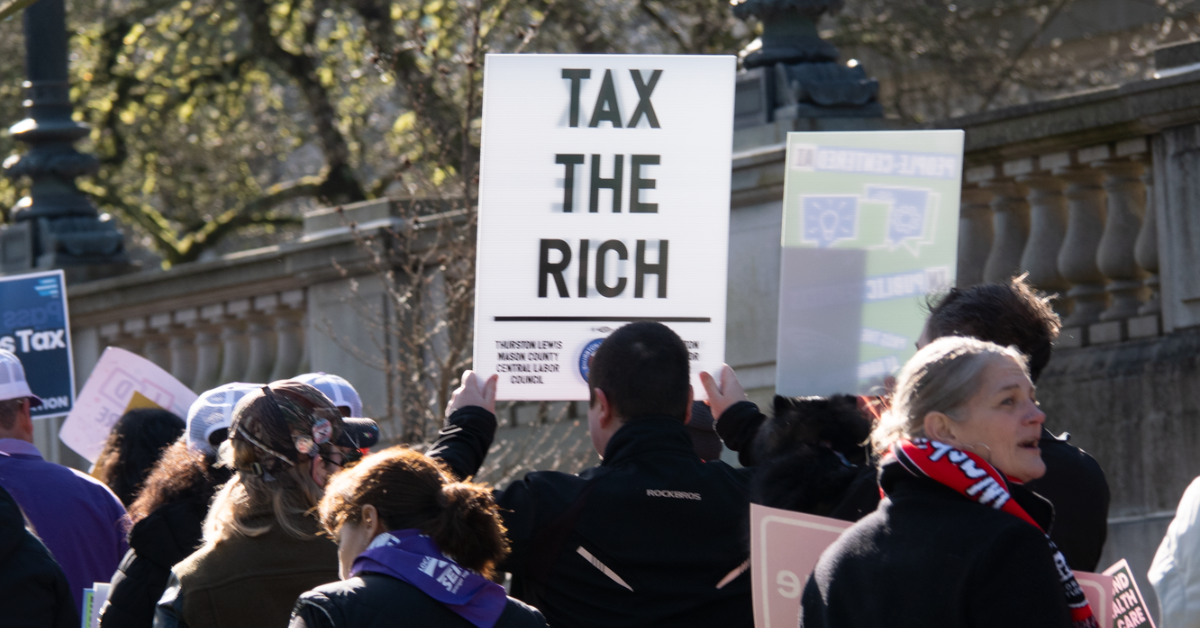
► From the New York Times — Democrats Consider Breaking a Taboo in Washington State: A Millionaires Tax — By West Coast standards, the income tax proposal is hardly radical. The tax rate on Washington millionaires would be the same as the income tax rate Oregon imposes on individuals earning at least $125,000. California’s top income tax rate, 12.3 percent, kicks in for individual incomes well below $1 million. On the other coast, Massachusetts voters approved a measure in 2022 that added a surtax on incomes over $1 million to help fund schools and transportation…“People still cannot afford to pay their rent, cannot afford to feed their families, can’t afford health care anymore, need child care to be able to go to work and can’t afford it,” said Noel Frame, a Democratic state senator who wrote last year’s failed wealth tax bill. “Our tax structure does not work.”
► From the Seattle Times — 5 takeaways from WA budget proposals — The plans dropped just a week after the state’s February revenue forecast showed modest improvement, trimming but not eliminating the $2.3 billion shortfall in the 2025-27 budget. Budget writers say the updated forecast softened the projected deficit but still leaves lawmakers billions short as rising costs in programs tied to enrollment and eligibility, such as Medicaid, special education and other social services, along with collective bargaining agreements and program growth, outpace revenue.
► From Punchbowl — Thune declares ‘talking filibuster’ dead — It’s yet another self-inflicted wound from a party that can’t seem to settle on a midterm message. Republicans are tearing themselves apart over legislation that has captivated Trump’s base but has almost no chance of becoming law. It’s also threatening to sour cross-Capitol relations among top Republicans. Thune has long expressed skepticism of the “talking filibuster” tactic, warning it would jam up the Senate floor for weeks or even months. The procedure would allow Senate Democrats to force votes on some of the most politically treacherous issues facing vulnerable Republicans. By Wednesday, Thune had enough. Thune declared publicly for the first time that there’s no way for Senate Republicans to maintain the procedural unity required in order to pass the SAVE America Act via a “talking filibuster.”
► From the New York Times — New A.C.A. Plans Could Increase Family Deductibles to $31,000 — The Trump administration’s proposed new rules for Obamacare plans next year would shift more health care costs to Americans, with much higher deductibles that could lead to greater medical bills. Under the proposal, people who rely on the Affordable Care Act for their health insurance coverage could choose plans with much lower monthly premiums. But that could leave them exposed to medical expenses totaling thousands of dollars more than A.C.A. plans do now before their insurance would kick in.
► From the New York Times — Judge Finds Trump Administration’s Third-Country Deportations Unlawful — In an 81-page ruling, Judge Brian E. Murphy of the Federal District Court for the District of Massachusetts wrote that the government must first try to deport detained immigrants to their home countries — or to countries designated by an immigration judge when the immigrants were ordered removed from the country. After that process, immigration detainees must be given “meaningful notice” before being deported to another country, to allow them the opportunity to raise any fears they have that they might be persecuted or tortured there. Judge Murphy, who was appointed to the bench by President Joseph R. Biden Jr., paused his own order for 15 days, which gives the government time to seek an appeal.
► From Trains.com — Senators introduce new version of Railway Safety Act — A bipartisan group of U.S. senators led by Maria Cantwell (D-Wash.) and Jon Husted (R-Ohio) introduced a new version of the Railway Safety Act today (Feb. 24). The new legislation includes a mandate for wayside defect detectors, an expanded list of hazardous materials subject to higher safety standards, and a two-person crew requirement. The Railway Safety Act of 2026 is the third version of the bill introduced following the Norfolk Southern derailment and hazardous material release in East Palestine, Ohio, in 2023.
INTERNATIONAL
► From the NL Times — Amsterdam honors February strike 85 years after historic protest against Nazi occupation — The February Strike of 1941 was a large-scale protest in the Netherlands against the Nazi occupation and the persecution of Jews, sparked by violent raids in Amsterdam’s Jewish neighborhood…”The February strikers opposed a fascist regime, dehumanization, and discrimination for many reasons. Let that serve as an inspiration for all of us today,” said Jaïr Stranders, chairman of the Committee for the 1941 February Strike Commemoration.
The Stand posts links to local, national and international labor news every weekday morning. Subscribe to get daily news in your inbox.



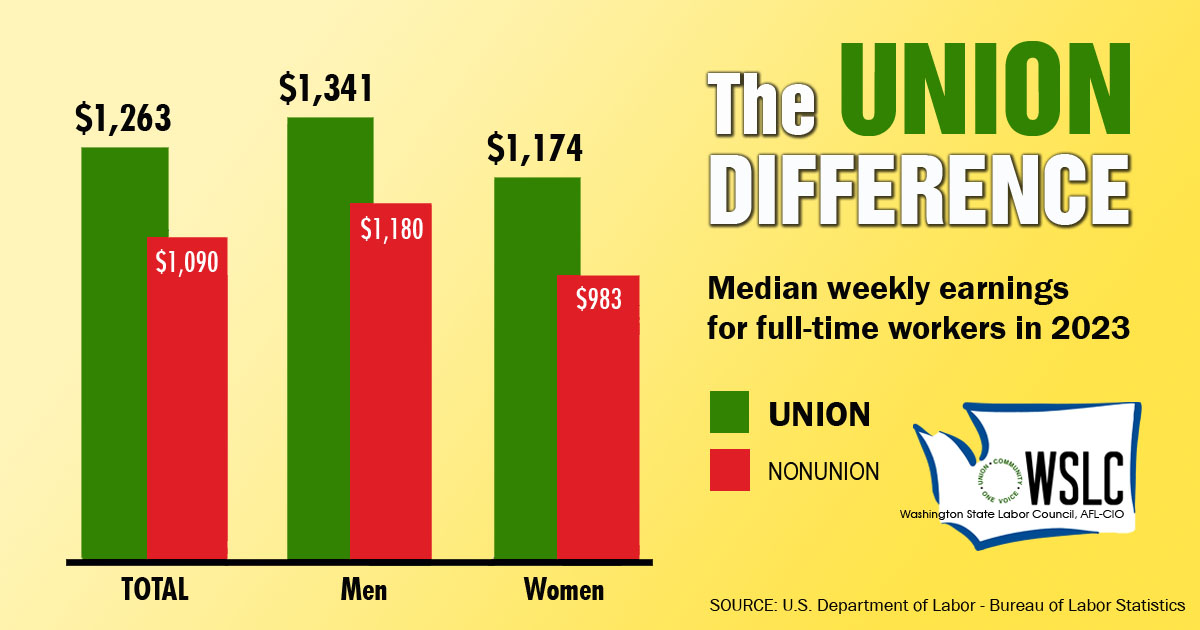
CHECK OUT THE UNION DIFFERENCE in Washington: higher wages, affordable health and dental care, job and retirement security.
FIND OUT HOW TO JOIN TOGETHER with your co-workers to negotiate for better wages, benefits, and a voice at work. Or go ahead and contact a union organizer today!