NEWS ROUNDUP
IAM & childcare | MultiCare seeks scabs | NY nurse strike ends
Monday, February 23, 2026
STRIKES
► From Becker’s Hospital Review — MultiCare hospital moves to replace striking workers — Members of Teamsters Local 760 began striking Jan. 17. The union represents 168 technical employees at the Yakima facility, including workers in surgery, radiology, MRI, pharmacy and laboratory departments, according to KNDO. Tacoma, Wash.-based MultiCare, the hospital’s parent organization, operates 13 hospitals and employs about 20,000 workers. Rick Salinas of Teamsters Local 760 told KIMA the decision was “not well taken” by striking workers. “It was received more by these employees as a threat of their employer,” Mr. Salinas said. “I can say that they are mostly disappointed in their actions and they continue to want to be out here for what they believe in, for what they feel is needed in terms of what their job protections are within the workplace.”
► From the New York Times — New York Nurses’ Strike Ends After 6 Weeks as Last Holdouts Approve Deal — Of the nurses who voted on Friday and Saturday regarding whether to ratify the three-year deal, 93 percent were in favor and 7 percent were opposed, the union said. A week earlier, nurses at the hospital had roundly rejected an earlier proposed contract. The New York State Nurses Association, the union representing the strikers, said in a statement that the workers had accomplished the goals they had set when the strike began. “They achieved contracts that set industry standards and will improve care for New Yorkers,” the union said in a statement.
LOCAL
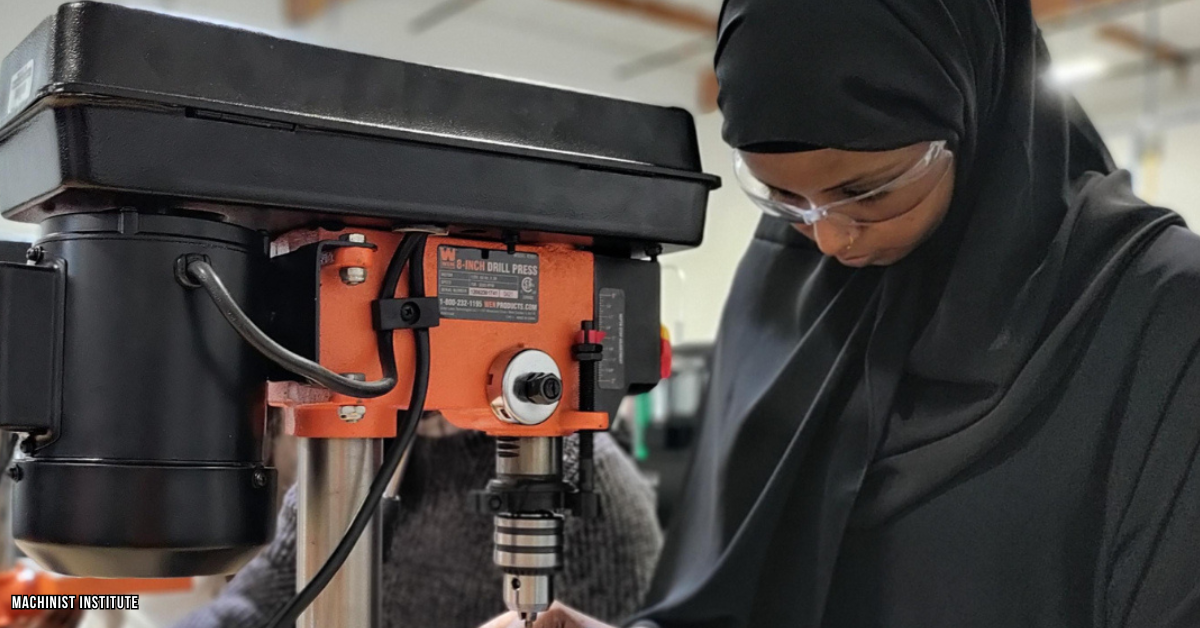
► From Workshift — An Institute for Training Machinists Takes on the Childcare Shortage — The Machinists Institute, which operates seven registered apprenticeship programs—for fabrication welders; heavy-duty equipment mechanics; industrial machinery technicians; machine operators; machinists; trailer, container, and van repair mechanics; and a first-in-the-nation option for manufacturing engineers—will open a childcare center in Everett, Washington, later this year. It will cater to tradespeople who may work very early or into the night, operating from 4 a.m. to about midnight, far longer hours than most centers are open, says Shana Peschek, the institute’s executive director. It will offer care on weekends, too. The aim is to support access to careers represented by the local International Association of Machinists and Aerospace Workers union, especially by providing care during what Peschek calls “that worst shift.”
► From the Seattle Times — What are UW athletes being paid? Inside a 6-month quest to find out — UW’s contracts both forbid student-athletes from disclosing any of the details for at least five years — and get athletes’ consent to release that information if the university wants to. For decades, college athletes have helped generate tens, hundreds of millions of dollars for their coaches, schools, conferences, while receiving only a scholarship for compensation. But this school year brought a revolution to college sports: For the first time in history, schools are allowed to pay athletes directly. More than 300 of the biggest colleges and universities are participating. But even though the overwhelming majority of those Division I schools are public institutions, this entire process is playing out in the dark — no school has publicly disclosed what it is paying student-athletes.
► From the Seattle Times — ICE data tells the story of almost 2,000 immigrant arrests in WA — They were as young as 3 and as old as 71. A strikingly large share had neither criminal convictions nor pending charges against them in the U.S. Many would be forced out of the country. These were the people taken into Immigration and Customs Enforcement custody last year in Washington state between the start of President Donald Trump’s second term and Oct. 15, according to the authoritative Deportation Data Project…Washington has one of the highest rates across the country of people arrested without a criminal conviction or pending charges in the U.S.: 47%.
AEROSPACE
► From the Hill — Supreme Court won’t hear Boeing’s bid to end pilot union’s 737 Max suit — In a brief order without any noted dissents, the justices left in place a Texas state court ruling that allows the case to move forward toward trial. Boeing had argued the lawsuit is preempted by federal law…The Southwest Airlines Pilots Association’s lawsuit claims Boeing made misrepresentations and fraudulently induced pilots to fly the aircraft without proper training. The suit seeks damages for lost compensation.
CONTRACT FIGHTS
► From the NW Labor Press — Strike threat looms at Portland Community College — Union workers at Portland Community College (PCC) say they’re ready to strike over the college’s offer of 0.35% annual raises. Two unions at PCC, the Federation of Faculty and Academic Professionals (PCCFFAP) and the Federation of Classified Employees (PCCFCE), jointly declared impasse in bargaining Jan. 30 and could go on strike as soon as March 10 after a state-mandated 30-day cooling off period and 10-day strike notice…“We want to be a fair and competitive employer, while also being mindful of the financial issues that all public colleges are facing,” PCC President Adrien Bennings wrote in a Feb. email to students. “That means working toward agreements that support employees without causing layoffs, reducing available classes, or increasing costs for students.” Bennings makes more than $330,000 a year plus $30,000 for a car and other expenses.
ORGANIZING
► From the NW Labor Press — REI must reinstate fired worker — An NLRB agent determined that REI fired Hamlin because of her union activity, that it illegally interrogated employees about the union campaign, and told them not to discuss whether recently fired employees would be able to vote in the union election. On Jan. 14, 2026, a federal administrative law judge agreed: REI had used the timekeeping violations as a pretext to get rid of Hamlin, a member of the union organizing committee…When an employer’s anti-union conduct is so extreme that it causes a union effort to lose support and obstructs the ability to hold a fair election, the NLRB can order the employer to bargain with the union as if it had won the election. Local 555 asked the NLRB to take that step, but the judge declined. Instead, the judge ordered a new election.
► From AL.com — UAW just scored a big Southern win. Alabama auto workers could be next — And armed with a contract victory, UAW could step up its efforts to organize once again in Alabama. An analyst for the Detroit Free Press all but guaranteed another union push prior to the contract vote. The vote failed last time in Vance after Mercedes made several last-minute moves in response to organizing. In the midst of the union campaign, Mercedes-Benz announced it was eliminating a two-tier pay system that had been the subject of employee ire. The company also instituted a $2 an hour raise for some topped-out employees, and named a new plant president. Smemo said another union push might prompt Mercedes or Hyundai to make similar moves with pay or benefits in order to forestall union activity.
NATIONAL
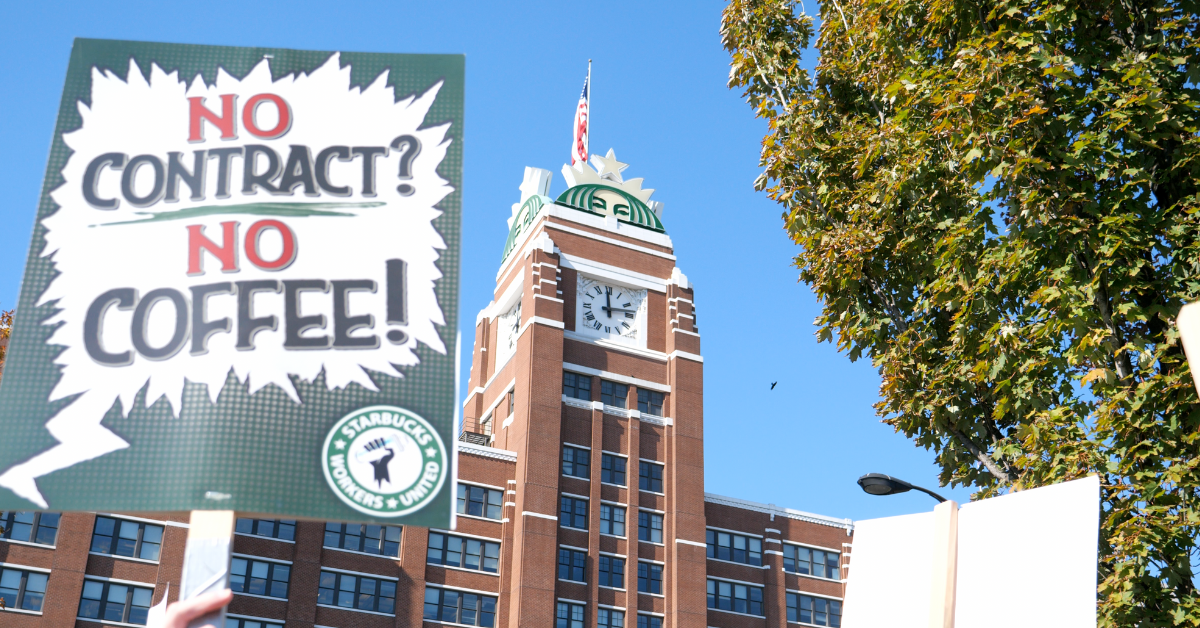
Starbucks baristas and supporters picketed outside the company’s corporate headquarters in September.
► From In These Times — Five Things the New BLS Union Membership Statistics Don’t Tell You — There’s even more organizing happening than the government union membership statistics seem to indicate, because these statistics only capture people who have secured an actual union contract. There’s been an uptick in organizing since the Covid pandemic, with 2024 marking a 10-year-high in National Labor Relations Board elections, though that rate significantly slowed down in the first year of the new Trump administration. Yet the post-pandemic organizing uptick has only begun to move the needle on membership numbers. Why? The BLS statistics only capture those people who either have a long-standing union contract or who have successfully jumped through all of the hoops it takes to win a contract within our nation’s broken labor law system. So, not a single one of the 12,000 Starbucks baristas who have voted to unionize across more than 600 stores since 2021 are counted in those membership statistics, for example, because Starbucks management won’t agree to a contract.
► From Labor On The Line:
► From the New York Times — Workplace Inspections by OSHA Dropped Over a Six-Month Period of 2025 — New data about the federal agency responsible for workplace safety suggests a substantial drop in inspections in the months after President Trump returned to office last year. The internal data from the Labor Department raises concerns about the government’s ability to police workplaces and protect U.S. workers…Worker safety advocates say fewer inspections will lead to more injuries and deaths on the job, and fewer penalties that have a significant effect in motivating companies to follow the rules. “Without that kind of deterrent, you have employers saying, ‘Why should I bother spending the money to protect my employees?’” said Jordan Barab, who served as the deputy assistant secretary of labor at OSHA from 2009 to 2017.
► From NPR — U.S. has a quarter fewer immigration judges than it did a year ago. Here’s why — The number of judges in the nation’s immigration courts shrunk by about a quarter in the last year due to firings and resignations — even when accounting for new hires. Twelve immigration courts have lost over half of their judges. Many courts are down to skeleton crews to handle thousands of cases; two courts have no judges at all…The continued drain of personnel and resources from the already strained immigration court system has contributed to depleted staff morale, mounting case backlogs — and a floundering due process system…”You are telling every other judge that is left that they better not be following the law or their conscience; that they need to apply the law as you are interpreting it,” said Arwen Swink, a former immigration judge fired from a San Francisco court in December. “You lose a little piece of justice. You lose some fundamental fairness, and understandably, you undermine confidence in the proceedings.”
► From Wired — Government Docs Reveal New Details About Tesla and Waymo Robotaxis’ Human Babysitters — The details of these companies’ “remote assistance” programs are important because the humans supporting the robots are critical in ensuring the cars are driving safely on public roads, industry experts say. Even robotaxis that run smoothly most of the time get into situations that their self-driving systems find perplexing. See, for example, a December power outage in San Francisco that killed stop lights around the city, stranding confused Waymos in several intersections. Or the ongoing government probes into several instances of these cars illegally blowing past stopped school buses unloading students in Austin, Texas. (The latter led Waymo to issue a software recall.)
POLITICS & POLICY
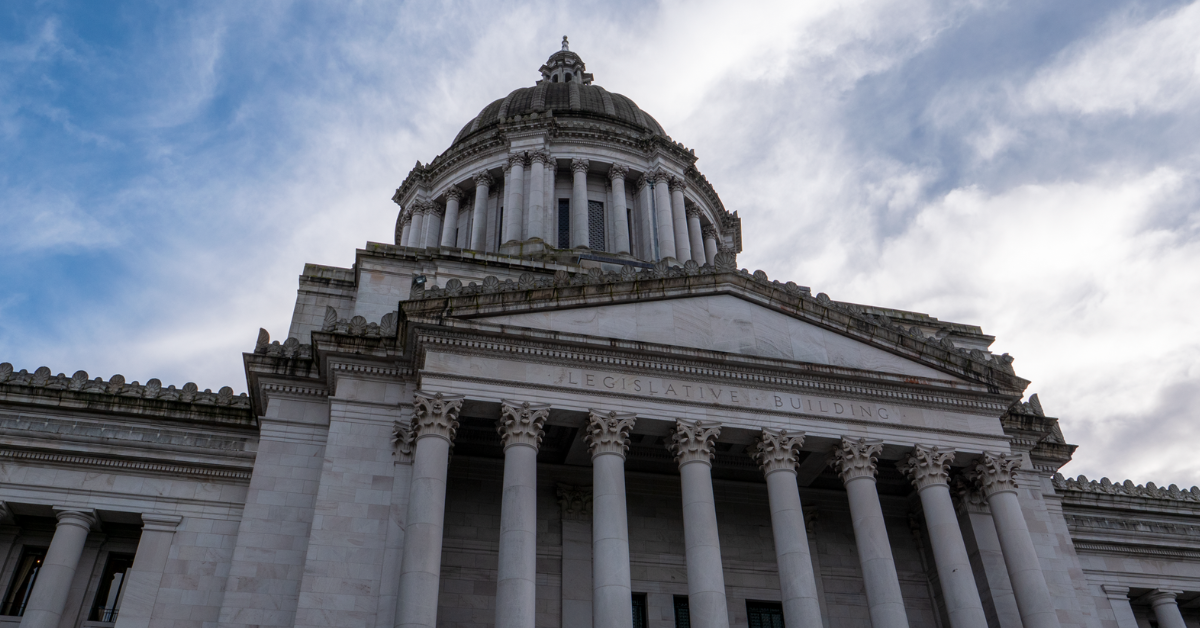
► From the Seattle Times — New WA budget plans show divide over taxes, reserves — The Senate’s $79.4 billion budget proposal pairs $2.3 billion in new spending on health care and public services with a future tax on income over $1 million, and a $750 million draw from the state’s rainy day fund. The House’s $79.9 billion budget takes a more cautious path, but also assumes the income tax on high earners, instead relying on existing revenue….Democratic budget leaders at a Sunday news conference said spending is growing significantly due to increases in “maintenance level” costs, legal liabilities and inflation. “We’re also crafting this budget with the background of a very unreliable, and at times hostile, federal government that has been taking services away from the people of Washington,” said budget Chair Sen. June Robinson, D-Everett.
► From Bloomberg — Costs of EPA’s Endangerment Finding Rollback Could Outweigh Savings — When President Donald Trump on Feb. 12 announced the “single largest deregulation in American history” — the repeal of climate emissions standards for all vehicles and the key scientific determination underpinning them, in one swoop — he said it would save Americans $1.3 trillion. But the administration’s own analyses, found in the official rulemaking published Wednesday in the Federal Register, show a more nuanced picture. The climate rollbacks also come with costs, ranging from hundreds of billions of dollars on the low end to more than $1.4 trillion on the high end — an amount that exceeds the projected savings.
► From the AP — Trump says he’ll raise tariffs to 15 percent after Supreme Court ruling — He’s already signed an executive order enabling him to bypass Congress and impose a 10% tax on imports from around the world, starting on Tuesday, the same day as his State of the Union speech. However, those tariffs are limited to 150 days unless they are extended legislatively.
► From the NW Labor Press — New union coalition will make a push for ‘climate jobs’ — Early sponsors of the group include the Oregon AFL-CIO; Oregon Building Trades Unions; IBEW locals 48, 125, and 932; Operating Engineers Local 701; Ironworkers Local 29; Laborers Local 737 and the Oregon and Southern Idaho District Council of Laborers; Sheet Metal Workers Local 16; and United Association of Plumbers and Steamfitters Local 290.
INTERNATIONAL
► From the AP — Robotaxis are coming to London. The city’s famed black cab drivers are skeptical — There’s also skepticism from London’s famed black cab drivers, who must pass a grueling training course known as “The Knowledge,” which requires memorizing hundreds of routes and takes years to complete. Self-driving taxis are “a solution looking for a problem,” said Steven McNamara, general secretary of the Licensed Taxi Drivers’ Association, which represents black cabbies.
► From Labor Notes — The Country Where Starbucks Workers Have a National Contract — Starbucks has signed union contracts almost nowhere, but in Chile, workers have a national agreement covering 176 stores. They were the first in the world to unionize, in 2009. In the U.S., workers at 550 stores finally brought Starbucks to the bargaining table in 2024 and in November last year they began a boycott and strike, in which more than 50 stores are now holding out, and some are walking out in short strikes, like seven stores that struck in Minneapolis for the ICE Out day January 23. Now 666 U.S. stores are unionized, but they still don’t have a contract. Asked the secret of the Chilean union’s unique success, past president Andres Giordano said, “This is not something that could be done in one or two years.” It took from 2009 to 2022 for the union to achieve a real contract. They did it through many ups and downs and without any full-time paid leaders.
The Stand posts links to local, national and international labor news every weekday morning. Subscribe to get daily news in your inbox.



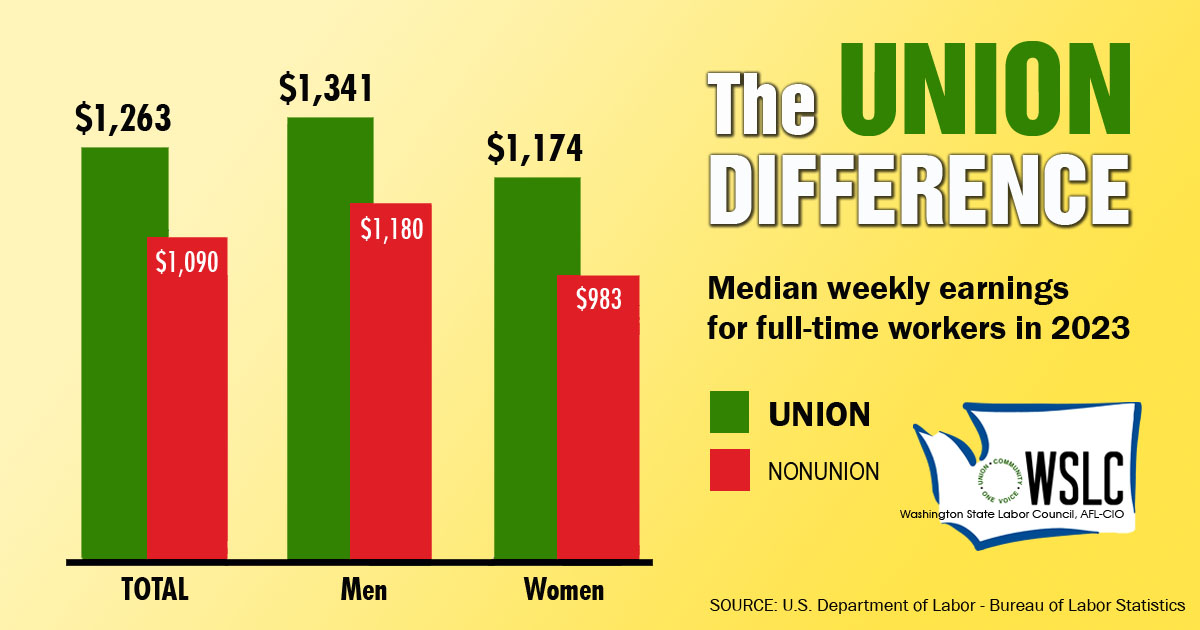
CHECK OUT THE UNION DIFFERENCE in Washington: higher wages, affordable health and dental care, job and retirement security.
FIND OUT HOW TO JOIN TOGETHER with your co-workers to negotiate for better wages, benefits, and a voice at work. Or go ahead and contact a union organizer today!