LOCAL
Public employees plan statewide walkouts
State’s legal costs top $500 million as public workers warn officials “would rather spend money in the courts after another avoidable tragedy than by proactively investing in their workforce”
The following is from WFSE/AFSCME Council 28:
OLYMPIA, WA (July 27, 2026) — Washington public employees represented by the Washington Federation of State Employees (WFSE) announced plans for a statewide walkout and called on leaders to reject failed austerity policies and invest in the workforce that powers the state’s economy, educates its future workforce, and delivers critical services to millions of residents every day.
As negotiations continue for new collective bargaining agreements covering workers across state agencies, community colleges, universities, and healthcare facilities, public employees are warning that Washington cannot continue expecting world-class results while refusing to invest in the people who provide them.
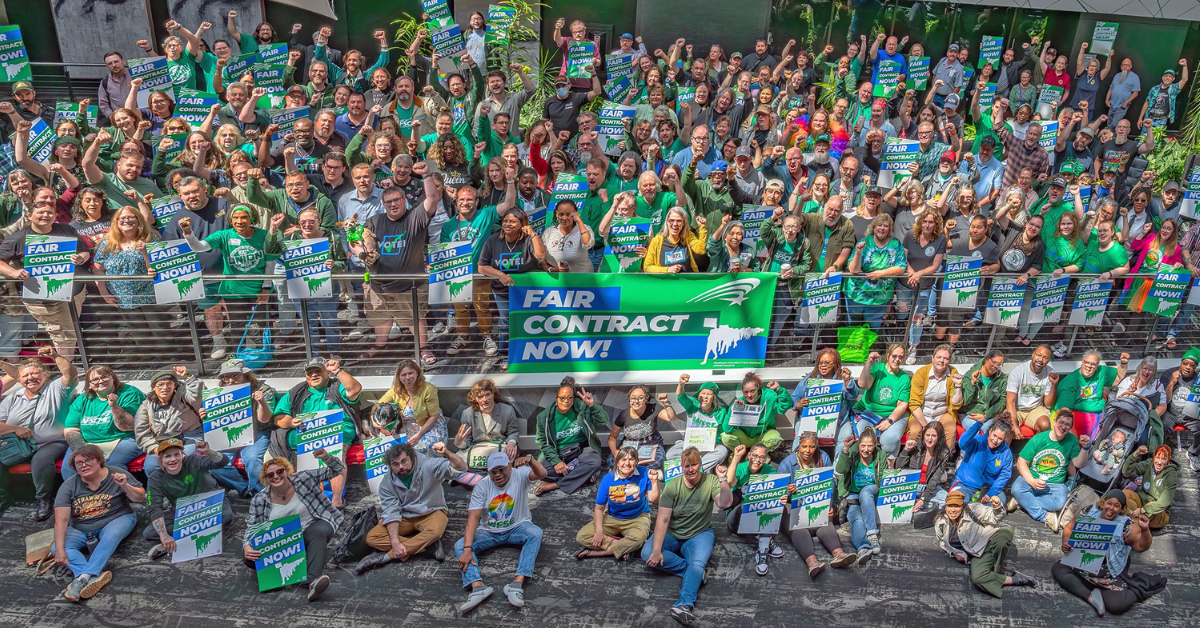
State workers in June 2026. Photo: WFSE
“Years of cuts and ballooning workloads to employees in high-stakes jobs, like protecting vulnerable children, maintaining public safety, and caring for intellectually and developmentally disabled folks is a recipe for avoidable suffering and billions in liability,” said WFSE President Mike Yestramski, a psychiatric social worker at Western State Hospital.
The state set another record in FY 2026 with $537 million in lawsuit payouts according to the Department of Enterprise Services. Over the last five years, the state has paid over $1.6 billion in tort claims, not including the cost of defense.
“We are sounding the alarm that the governor’s team seems intent on following the same failed policies that produced the shortfall in the first place,” Yestramski said.
“We haven’t received complete compensation proposals at any tables we represent yet, but when we heard the state’s negotiators say they couldn’t spend a dime on this contract, the message is clear. They would rather spend money in the courts after another avoidable tragedy than by proactively investing in their workforce. We think the public deserves to know that.”
State leaders project growing demand for public services while proposing compensation packages that workers say fail to keep pace with inflation and rising living costs.
The WFSE Community College Coalition bargaining team, who are negotiating a contract for workers at 12 community colleges, share that at the very moment Washington needs to train more nurses, healthcare workers, tradespeople, and other in-demand professionals, the state seems prepared to propose compensation policies that make it harder to retain the employees who provide that training.
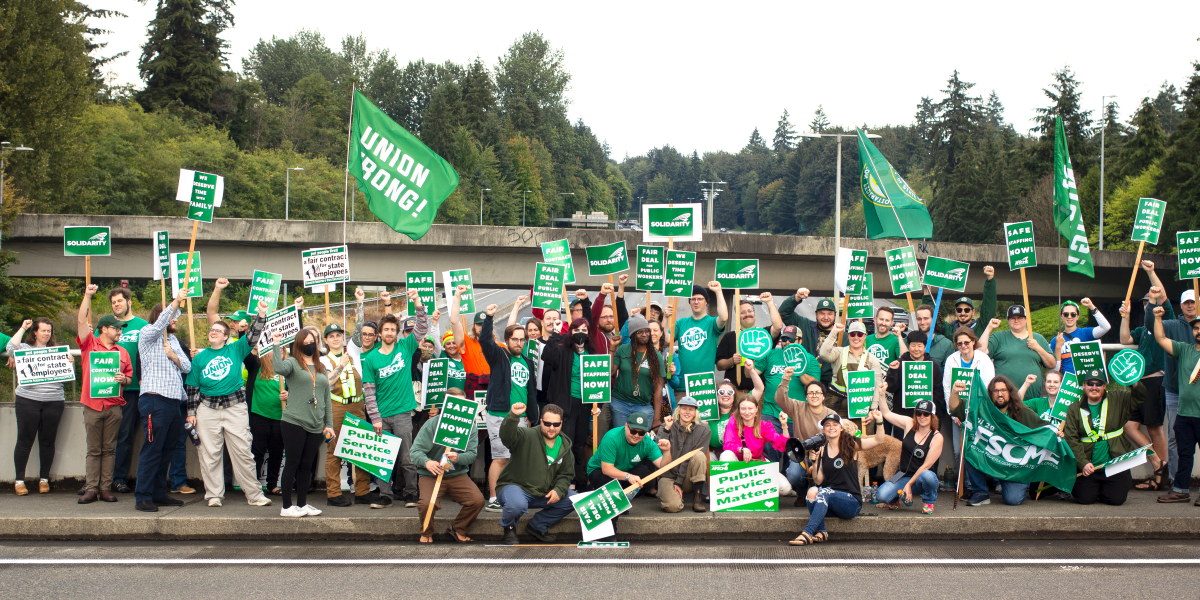
Public workers rallying during 2024 contract negotiations. Photo: WFSE
Taken together, the public higher education workforce and those in our state agencies make state government the largest employer in Washington. Their wages support large and small local businesses, housing markets, restaurants, retail stores, and communities across the state. Every dollar invested in public-sector jobs generates approximately $1.60 in local economic activity. Over 100 small businesses across the state have publicly pledged their support for public workers during this round of negotiations.
Workers also argue that chronic underinvestment has created another costly cycle. Low compensation has made it more difficult to recruit and retain skilled employees in fields ranging from accounting and information technology to healthcare and the skilled trades. As vacancies persist, agencies increasingly rely on outside contractors, who often cost substantially more than retaining experienced state employees.
New federal requirements for Basic Food (SNAP) benefits are already multiplying workloads for workers at the Department of Social and Health Services who are stretched thin from years of cuts, and it’s hungry families who are paying the price.
In a letter campaign aimed at Governor Ferguson, the Office of Financial Management, and leadership at Washington’s community colleges and universities, WFSE highlights this round of negotiations being pivotal for our communities, with over $4b in Medicaid cuts estimated in 2027:
“This round of negotiations will determine the state of our safety net when our most vulnerable need us more than ever. Budgets are a reflection of our values – and Washington can help lead the nation by showing a different way to address systemic inequalities and shortfalls than what is being modeled in the other Washington.”
The Washington Federation of State Employees/AFSCME Council 28 is the largest union of public workers in Washington, representing over 50,000 state and other public service workers. Learn more at wfse.org.



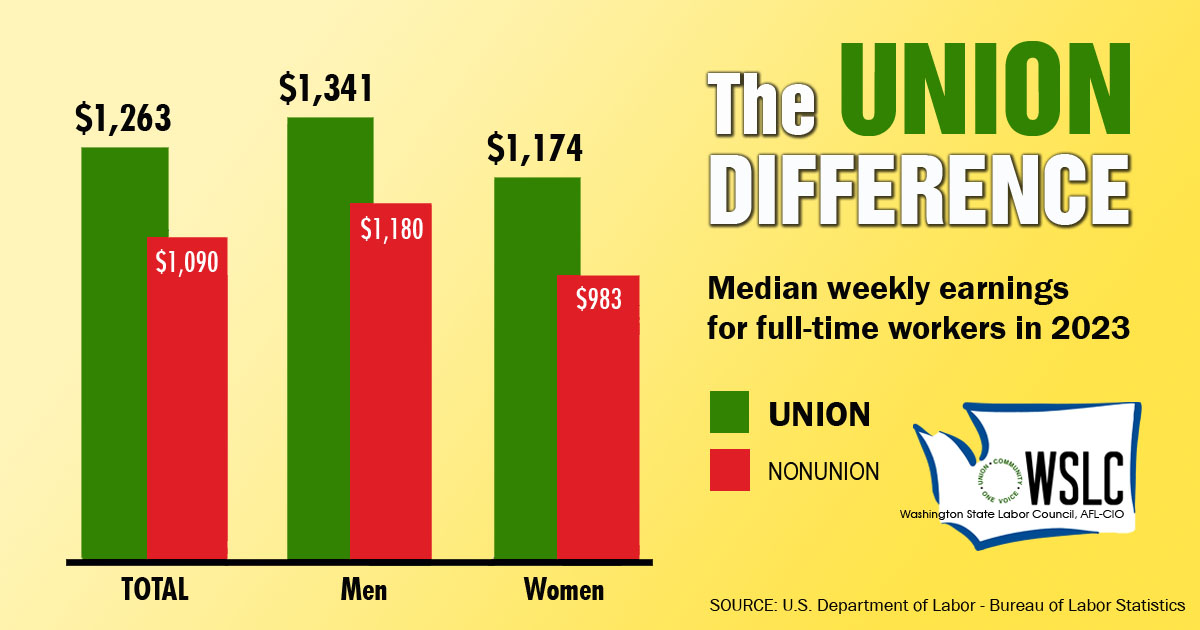
CHECK OUT THE UNION DIFFERENCE in Washington: higher wages, affordable health and dental care, job and retirement security.
FIND OUT HOW TO JOIN TOGETHER with your co-workers to negotiate for better wages, benefits, and a voice at work. Or go ahead and contact a union organizer today!