LOCAL
Standing up for immigrant rights
How we can act together in solidarity to defend our immigrant coworkers and neighbors in Washington state
SEATTLE, WA (January 28, 2026) — The surge in Minneapolis and reports of increased ICE activity in Washington have many working people across the state on edge. Under the Trump administration, ICE and Border Patrol have violated due process, terrorized families, raided job sites, taken children, and detained and deported citizens. Recent killings of legal observers Renee Nicole Good and AFGE brother Alex Pretti in Minneapolis — and at least one homicide inside detention centers — have heightened fear for many. While it is immigrants who are targeted (the majority of whom have no criminal record) civilians of any immigration status are being harmed, particularly people of color. As a result, working people across the U.S. are seeking information on how to best protect themselves and their neighbors when federal agents, empowered to operate without accountability, come to their communities.
Standing up to government tyranny is a vital expression of worker solidarity. As Brent Booker, General President of the Laborers’ International Union of North America (LiUNA) explained in a recent statement:
“Solidarity is the core of the labor movement and the foundation of our union family. We know from experience that if authority is allowed to go unchecked, workers and their rights are the first to suffer. As union members, we must come together, stand together, and unite to defend the freedoms that are central to our country and to our union – for Alex, for our members, and for all working people.”
For those looking to put that solidarity into action, here are some of the resources available in Washington State.
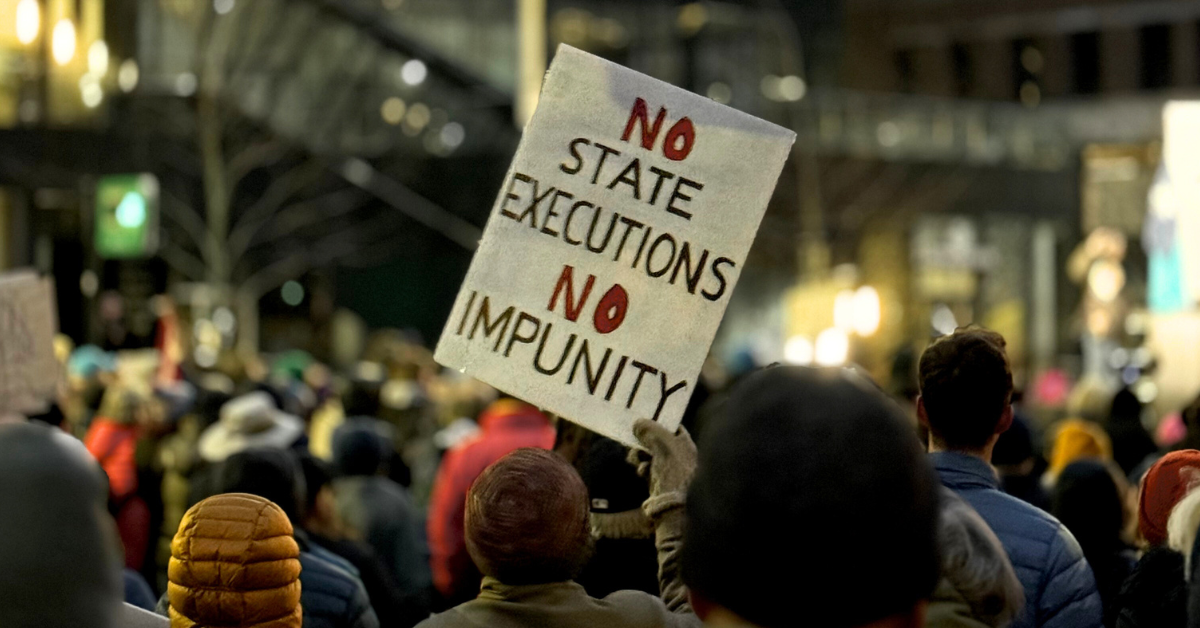
Protestors outside the federal building in downtown Seattle on January 26.
The Washington Immigrant Solidarity Network (WAISN)
WAISN provides training and resources for Washingtonians looking to learn about their rights in interactions with federal immigration enforcement, whether as the target of an immigration enforcement action or an observer. They offer know your rights flyers available in more than 15 languages. 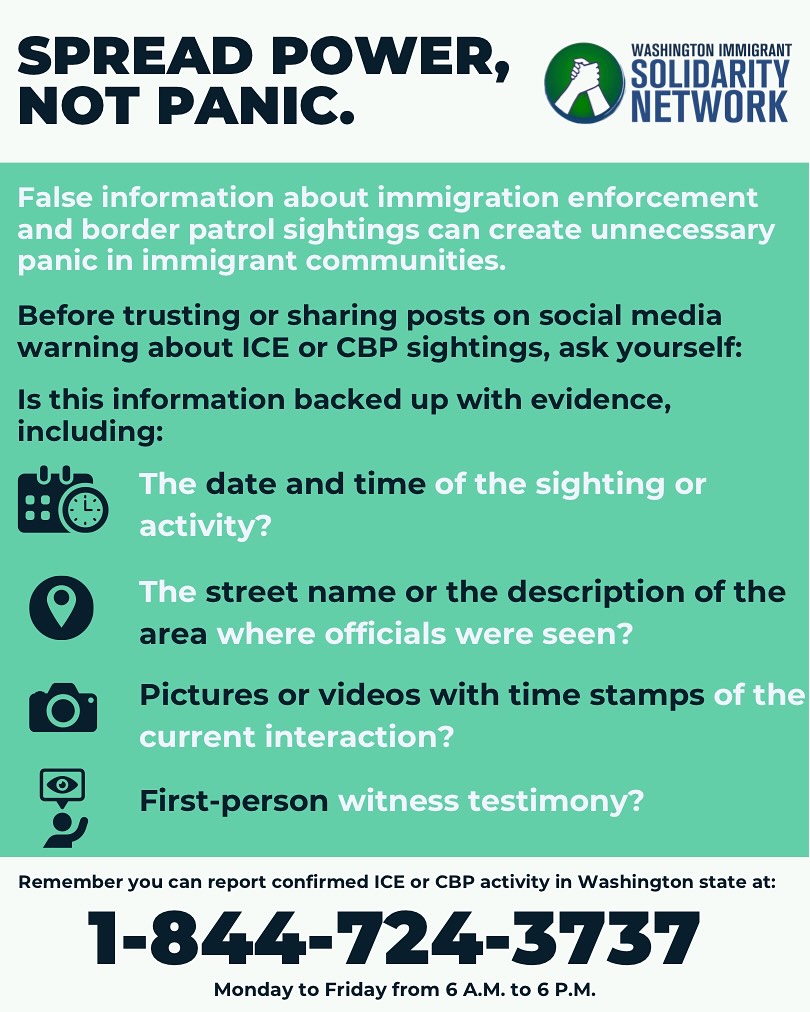
Rapid Response: WAISN runs a Deportation Defense hotline, where folks can call in sitings of immigration agents. WAISN vets these calls before making any public statements about ICE or Border Patrol presence. This is vital; sharing unfounded rumors can spread panic and make it harder for advocates to identify when real enforcement actions are taking place.
In the U.S., we all have the legal right to record immigration or police officers in public, so long as filming doesn’t impede their duties. WAISN has a quick guide for those engaging in rapid response to immigration actions in their neighborhoods, and runs Rapid Response trainings to empower community members with tools to document ICE and CBP. When recording, narrating out loud what’s happening can help with making an accurate report to the Deportation Defense Hotline.
Other ways to get involved: WAISN also offers an accompaniment program for folks heading to court proceedings. Volunteers can sign-up and get trained to join the accompaniment team to physically accompany an immigrant to their hearings and provide moral support. You can also become a member of WAISN, paying monthly dues to sustain their work. And follow them on Facebook to stay up to date on ways to support.
Resources: WAISN also hosts a resource finder, with trusted information sources they have vetted. That database covers everything from legal services and hardship assistance to guides for building a Fourth Amendment Workplace, a increasingly-popular concept utilizing constitutional rights to make workplaces safer for all workers.
AFL-CIO workplace rights info
Speaking of workplaces: since DHS leadership has embraced job site raids, familiarizing yourself with your workplace rights (including the right to organize with your coworkers) is essential.
Northwest Immigrant Rights Project (NWIRP)
Rapid response to immigration actions in the workplace or in neighborhoods isn’t the only way to get involved. NWIRP, which provides legal assistance to immigrants, has a variety of ways folks can take action for immigrant rights, from volunteering as an interpreter or translator to supporting on-the-ground organizations like La Resistencia, which provides direct services and advocates for the people held at the Northwest Detention Center in Tacoma. NWIRP also accepts donations to help fund legal aid.



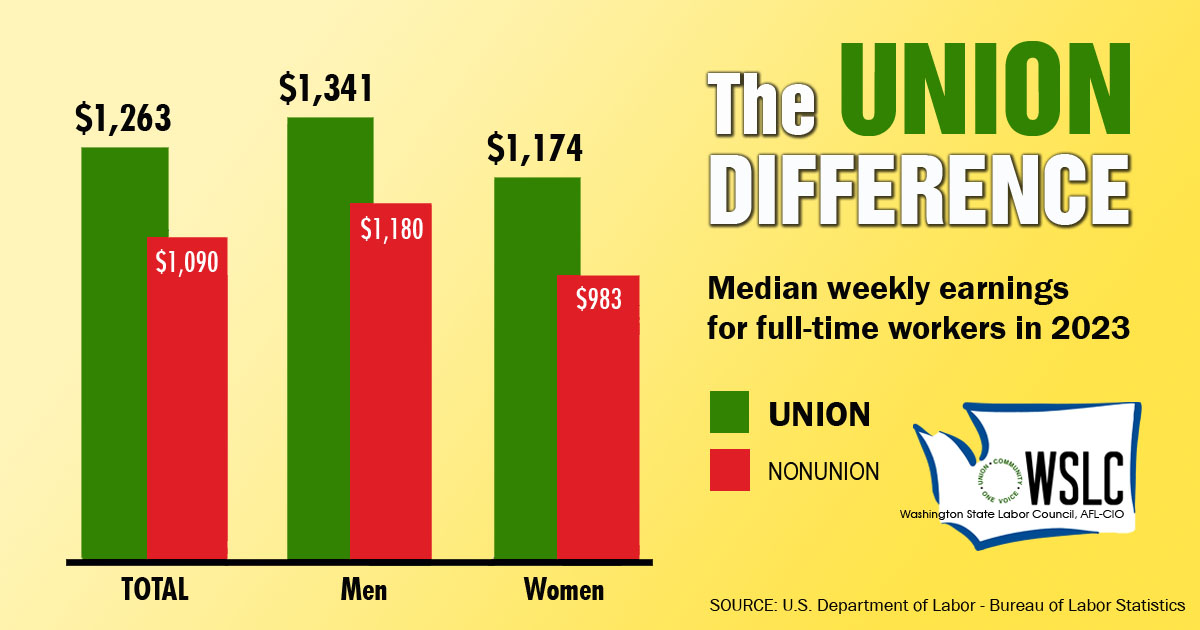
CHECK OUT THE UNION DIFFERENCE in Washington: higher wages, affordable health and dental care, job and retirement security.
FIND OUT HOW TO JOIN TOGETHER with your co-workers to negotiate for better wages, benefits, and a voice at work. Or go ahead and contact a union organizer today!