LOCAL
Sound Transit staff fight for workplace flexibility
PROTEC 17 members presented a petition to Sound Transit CEO Dow Constantine urging management to respect workers and the bargaining process
SEATTLE, WA (April 28, 2026) — Sound Transit workers in active bargaining took action at the most recent board meeting of the transit agency, calling on CEO Dow Constantine to engage in good faith in ongoing contract negotiations rather than unilaterally impose changes in working conditions. Workers have been negotiating over the past year for a first contract, including terms to protect remote work; despite ongoing conversations at the table, Constantine recently mandated a return-to-office, reports the workers’ union, PROTEC17.
PROTEC17 represents Sound Transit staff working in Environmental Sustainability, Community Engagement, Construction Support Services, Project Controls, and Transit Systems departments, helping ensure transit projects are delivered on time and on track, maintaining transit lines, and building community connections. Among these workers are staff hired under the understanding they would be able to work remotely; a sudden mandate to return to offices they’ve never actually worked from is a significant change in working conditions.
Union members took to the Sound Transit board meeting on April 23, using the public comment period to share their concerns and urge leadership to respect the bargaining process, so a real conversation can be had about a RTO mandate.
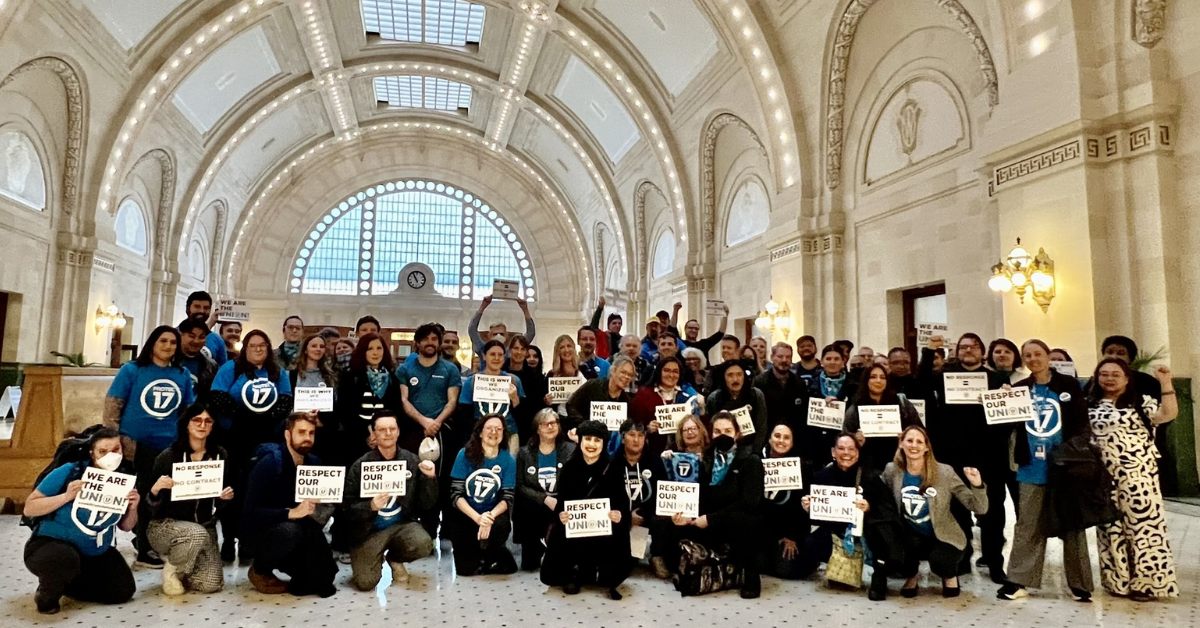
Sound Transit workers organized with PROTEC17 taking action at a November 2025 Sound Transit board meeting. Photo: PROTEC17
“We had been here November 6 to give public comment. We find ourselves in front of you today to convey that Sound Transit continues to negotiate in bad faith regarding their RTO mandate,” said Brian Verila, a Senior Project Control Specialist. Verila detailed a consultation process that asked workers to take time to explain their remote work needs, only for managers to say that they would base decisions on Sound Transit leadership dictates, not worker needs — even as some managers took advantage of remote work flexibility while enforcing a RTO mandate on staff.
“We have been negotiating for the past year toward our first contract and we are not making progress on the return to office issue,” said Teresa Vandeberg, a member of the professional staff. “We are asking for greater flexibility for the represented staff including retaining the ability to work remotely…We have one staff member who lives in Thurston County. She accepted a position at Sound Transit in 2022 based on assurances that she could work remotely. Will the agency honor it’s past commitments or demand that she return to the office?”
Vandeberg continued: “At the heart of this issue, workplace flexibility is about equity. Equity for working parents and caregivers, equity for employees who made major life decisions, including where to live, based on the understanding that their roles would remain remote.”
Vandeberg’s comment on equity is backed up by data. The rise of telework has allowed working mothers, who still disproportionately carry the work of child care, to not only remain in the workforce, but grow participation. Washington state has some of the highest child care costs in the country; remote work flexibility isn’t a cure for the child care crisis, but it is a significant factor in expanding opportunities for working parents to pursue careers.
No matter a workers’ domestic obligations, respecting commitments made to remote work flexibility helps keep Sound Transit on track as it works to expand a now-historic transit system.
“If employees are not feeling valued, the agency will ultimately lose talent and tenured knowledge, which results in continued delays on projects,” said Sherman McCrae, a supervisor of fare engagement and bargaining team member. “As Sound Transit grows, we want to grow with it as a workforce so that projects like the West Seattle Link Extension come to fruition.”



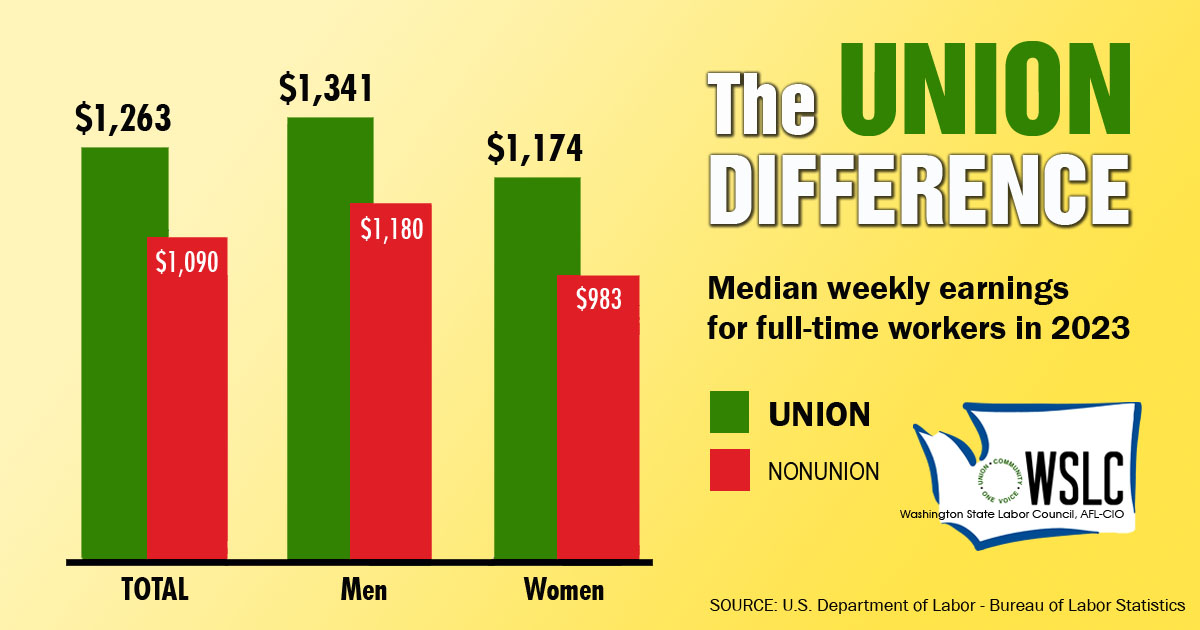
CHECK OUT THE UNION DIFFERENCE in Washington: higher wages, affordable health and dental care, job and retirement security.
FIND OUT HOW TO JOIN TOGETHER with your co-workers to negotiate for better wages, benefits, and a voice at work. Or go ahead and contact a union organizer today!