LOCAL
Farm workers keep the pressure on at Windmill Farms
Expanding the boycott’s reach, legislative advocacy, and a new look at the company’s private equity owners — here’s the status of the fight for union recognition at Windmill Farms
SUNNYSIDE, WA (June 4, 2026) — Farm workers, advocates, legislators, and labor allies gathered at the Seattle Labor Temple on Wednesday to share news about the ongoing, multiyear fight for union recognition and a collective bargaining agreement at Windmill Farms. Since voting to unionize in 2022, mushroom workers at Windmill Farms have faced a campaign of harassment and retaliation–because Washington state law does not yet protect farmworkers’ right to organize, the company has been able to union-bust without legal consequences. Still, workers are refusing to back down nearly four years later, running a multi-pronged campaign to pressure the company and secure legal protections.
Since the United Farm Workers called a boycott of Windmill Farms mushrooms more than a year ago, the economic pressure campaign on the company has picked up steam. Alongside the Oregon AFL-CIO and Washington State Labor Council, AFL-CIO, the Canadian Labour Congress has also endorsed the boycott, an important step as Windmill Farms is owned by Instar Asset Management, a Toronto-based private equity firm.
On the U.S. side of the border, more grocery stores have agreed to pull Windmill mushrooms from the shelves. After a determined campaign led by the Farmworker Ministry Northwest and Reverend Connie Yost, the Market of Choice chain in Portland agreed to honor the boycott, taking Windmill mushrooms off the shelves in its stores. Yost shared that fellow advocates have already identified the next grocery store chain they are working on.
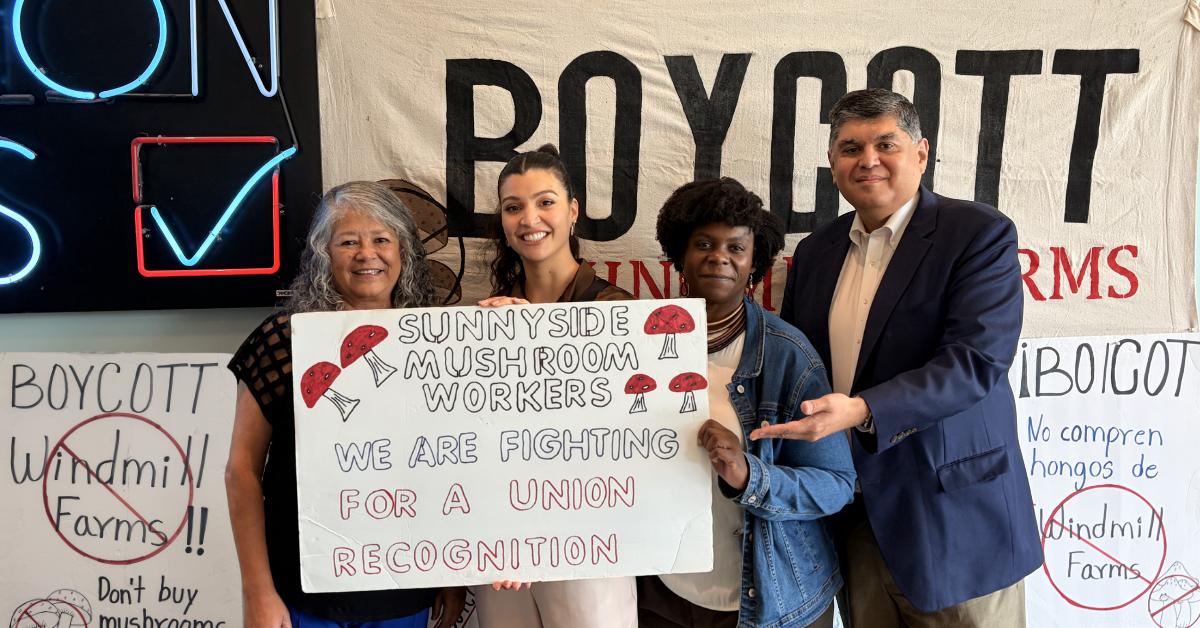
UFW President Teresa Romero, WA State Reps. Sharlett Mena & Jamila Taylor, and State Sen. Javier Valdez.
The boycott is one tactic to increase pressure on Windmill to recognize the workers’ union. Washington’s labor movement is also fighting to change the law to protect and enforce farmworkers’ right to organize and collectively bargain. At Wednesday’s gathering, farm workers shared why legal protections were so essential, especially as ICE terrorizes immigrant communities. Already exploited for their labor, farm workers are living under constant threat of racial profiling, detention, denial of due process, and deportation.
“We know that we’re going to work but we don’t know if we’re coming back home,” one worker said through a translator. “That is why we ask those that have power to see us.”
State legislators joined the luncheon to hear directly from farmworkers about working conditions and to share their commitment to pass a farmworker collective bargaining bill. In attendance were State Senators Rebecca Saldaña and Javier Valdez, as well as State Representatives Sharlett Mena, Chris Stearns, and Jamila Taylor. Sen. Saldaña and Rep. Mena were sponsors of legislation in the 2026 session to codify farmworker collective bargaining rights.
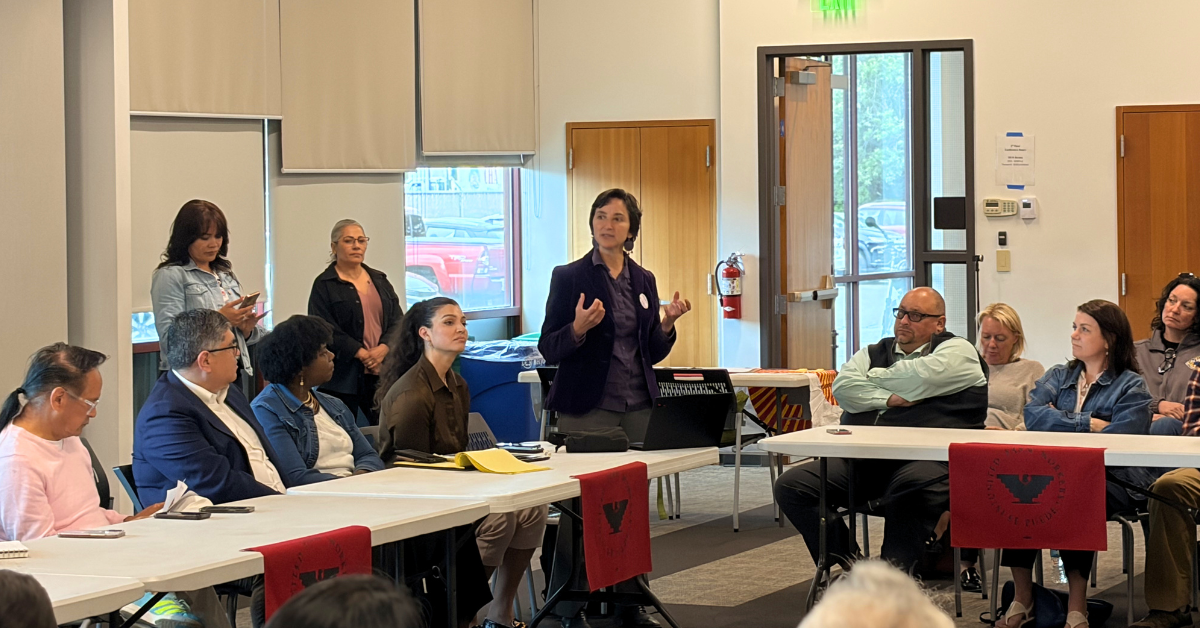
State Sen. Rebecca Saldaña speaks during the luncheon.
Saldaña spoke of the obstacles that legislation faced. Washington’s population is concentrated in cities and suburbs, meaning many legislators do not represent agricultural areas and aren’t familiar with working conditions on farms and in packing houses. Agricultural employers pay lobbyists to flood legislators with boss’ view that Washington policies–which currently allow farm workers to be profoundly exploited–are somehow too onerous for employers. But farm workers, working long hours for little pay to put food on everyone’s tables, can’t spend weeks in Olympia making sure legislators hear what working conditions are really like. Saldaña shared that more work is needed to ensure the stories heard in the room on Wednesday are also heard by decision-makers in the legislature.
While both the legislative fight for farmworker rights and the boycott continue, activists are also targeting the private equity company that owns Windmill Farms, Instar Asset Management. For more than two years, farm workers and the UFW have attempted to meet with Instar to lay out how Windmill’s resistance to a union campaign is impacting the company’s bottom line. Instar has so far refused to speak with the workers.
But farm workers’ arguments are born out by new research from the University of Oregon Labor and Education Research Center, outlining how Instar has been an unreliable investment for institutional investors, including public pension funds.
From the report: “Instar has seen serious human capitol management failures stemming from portfolio company Windmill Farms in Sunnyside, Washington. Negative press coverage and a growing consumer boycott of Windmill Farms’ products creates headline risk for Instar and its limited partners.” The report details further performance issues at other Instar-owned companies, painting a picture of a company that is a serious investment risk.
As the pressure campaign and fight for legal protections continues, Washington’s labor movement is celebrating Windmill mushroom workers for standing up for their rights and demonstrating the power of working people standing together despite a system rigged against them.
“We are here today to celebrate the courage, bravery and strength of farm workers,” said MLK Labor Executive Secretary Treasurer Katie Garrow.
“If these farm workers can win their fight against private equity, it means workers anywhere can win,” Garrow continued. “It sends a message to workers everywhere that a fight for a fair workplace is within their grasp.”
Allies can support the farm workers by signing their pledge to boycott Windmill Farms’ mushrooms.



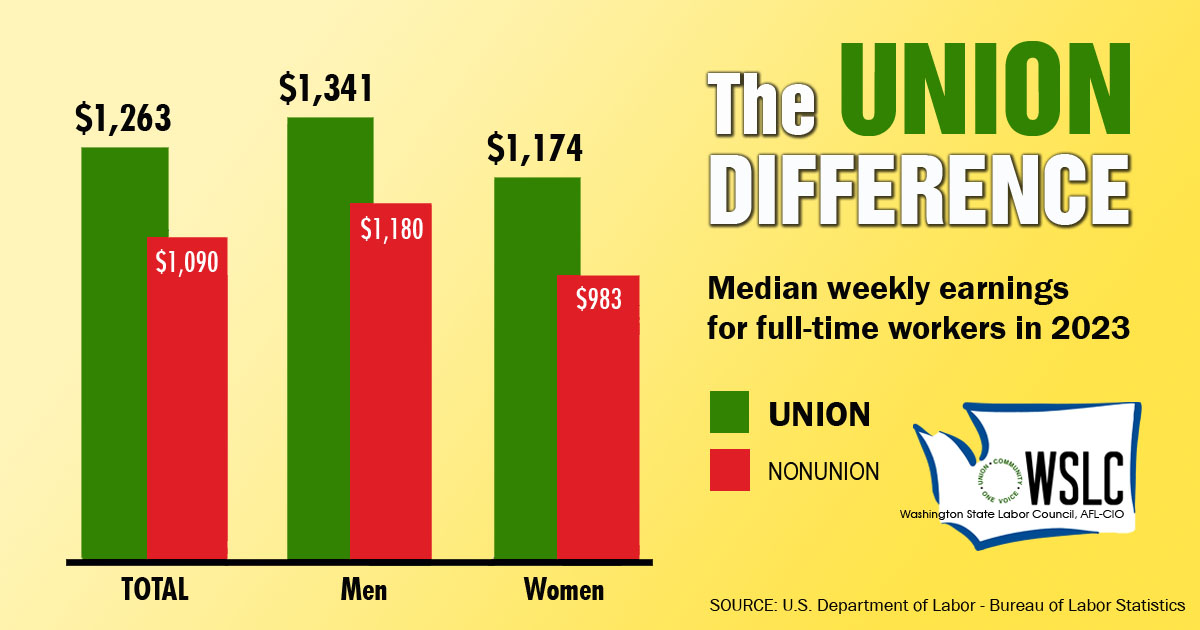
CHECK OUT THE UNION DIFFERENCE in Washington: higher wages, affordable health and dental care, job and retirement security.
FIND OUT HOW TO JOIN TOGETHER with your co-workers to negotiate for better wages, benefits, and a voice at work. Or go ahead and contact a union organizer today!