NATIONAL
NLRB finds Starbucks broke the law — again
Anti-worker actions have earned the company a reputation as the most prolific union-buster in modern history
WASHINGTON, D.C. (June 12, 2026) — The National Labor Relations Board (NLRB) has once more found Starbucks violated labor law in dealings with baristas, including illegally asking Seattle-based employees about their intent to participate in a strike action. The NLRB has now sustained more than 140 unfair labor practice charges from Starbucks Workers United (SBWU).
One decision sustains an administrative law judge (ALJ) ruling that Starbucks illegally asked workers at two Seattle stores if they planned to participate in strikes during the spring and summer of 2023, determining those actions were illegal interrogation under the National Labor Relations Act. The company has been ordered to cease “coercively interrogating employees” and post notices telling workers the company broke the law. This is the latest sustained ULP concerning intimidation or retaliation against workers engaging in protected union activity.
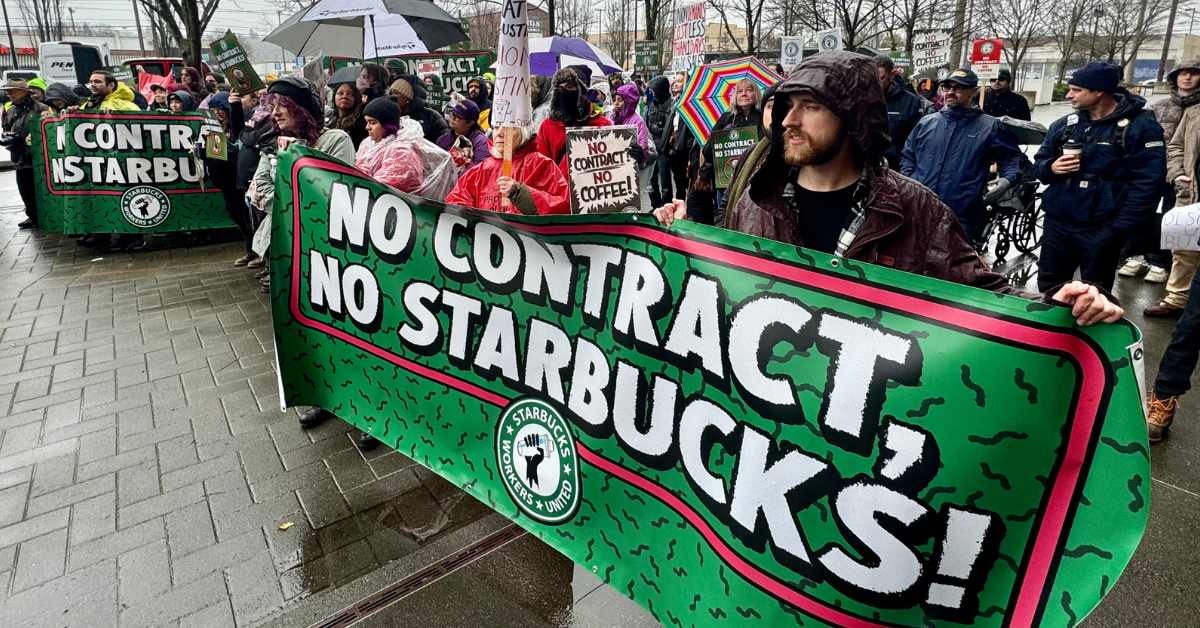
Union baristas and supporters rally in front of Starbucks’ corporate headquarters in Seattle in December of 2025.
A separate NLRB decision concerning a ULP filed on behalf of Portland-based workers found Starbucks failed to negotiate implementation of a dress code, a violation of their legal obligation to provide the union with prior notice and the opportunity to bargain effects. The board ordered the company to end unilateral changes to the policy and remove any disciplinary action taken against workers who did not follow the illegally-imposed dress code.
Starbucks has waged a scorched-earth campaign against workers’ democratically elected union for years. SBWU has filed more than 700 ULPs against the company, including more than 200 charges just for retaliatory firings of union baristas. That anti-union campaign has been particularly brutal in Buffalo, where the union got its start. In a 2024 decision outlining 60 different illegal company actions in Buffalo alone, the board wrote, “the severity and pervasiveness of the Respondent’s unfair labor practices demonstrate a general disregard for its employees’ fundamental statutory rights in its Buffalo-area stores.”
With more than 400 ULPs sustained by ALJs in the past four years, the union-busting began in Buffalo has clearly spread nationwide. It’s earned Starbucks a reputation as a notoriously anti-worker company, garnered significant negative press attention, public concerns from investors, and condemnation from politicians across the political spectrum.
And yet, Starbucks so far refuses to respect labor law and negotiate a fair contract with baristas. More than 700 stores across the U.S. are now union, but the company continues to stonewall on a collective bargaining agreement, despite SBWU reporting that settling outstanding economic proposals would cost the company only one day of sales.
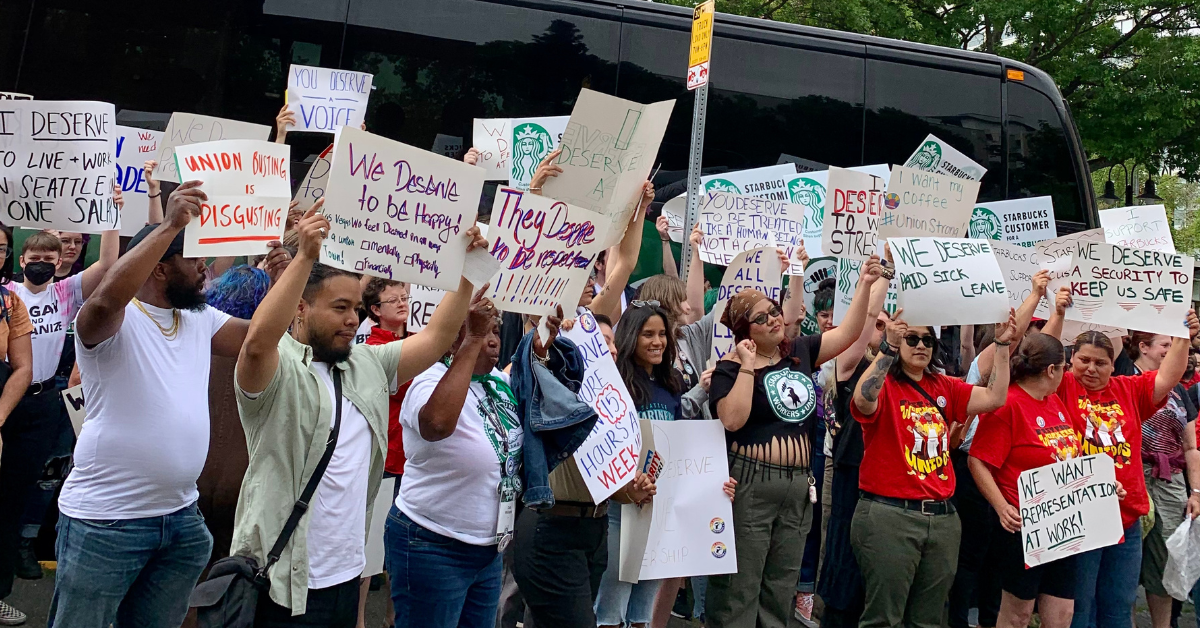
Starbucks workers and allies at a rally at Starbucks headquarters in 2023.
Four years since the first store unionized, Starbucks continues to deny workers a contract.
Starbucks provides a textbook example of a failing in the National Labor Relations Act, one that a bipartisan group of legislators have come forward to fix. On Tuesday, the U.S. House of Representatives voted to advance the Faster Labor Contracts Act to amend the NLRA and compel employers to promptly negotiate first contracts, sitting down at the table within 10 days of the certification of a new union. The legislation would also impose a 90-day timeline to reach a deal, after which federal mediators would step in to enforce workers’ right to securing a collective bargaining agreement. If mediators can’t secure an agreement within 30 days, an arbitrator panel would impose a contract, binding for two years or until the employer and workers reach agreement.
Despite heavy opposition from corporations committed to violating labor law, 20 Republican congress members broke ranks with their party to support workers’ rights and vote for the legislation. In a congress defined by partisan gridlock, rare bipartisan support indicates some politicians are paying attention to growing pro-union sentiment in the U.S. in an election year where attacks on workers, an affordability crisis, and the Trump administration’s cozy relationship with virulently anti-worker billionaires weighs heavily on voters’ minds.
In the face of Starbucks’ law-breaking, baristas continue to organize and keep the pressure on for a contract. After rolling ULP strikes at the end of 2025 and beginning of 2026, SBWU continues to call on supporters to not patronize any Starbucks location until a fair contract is reached.
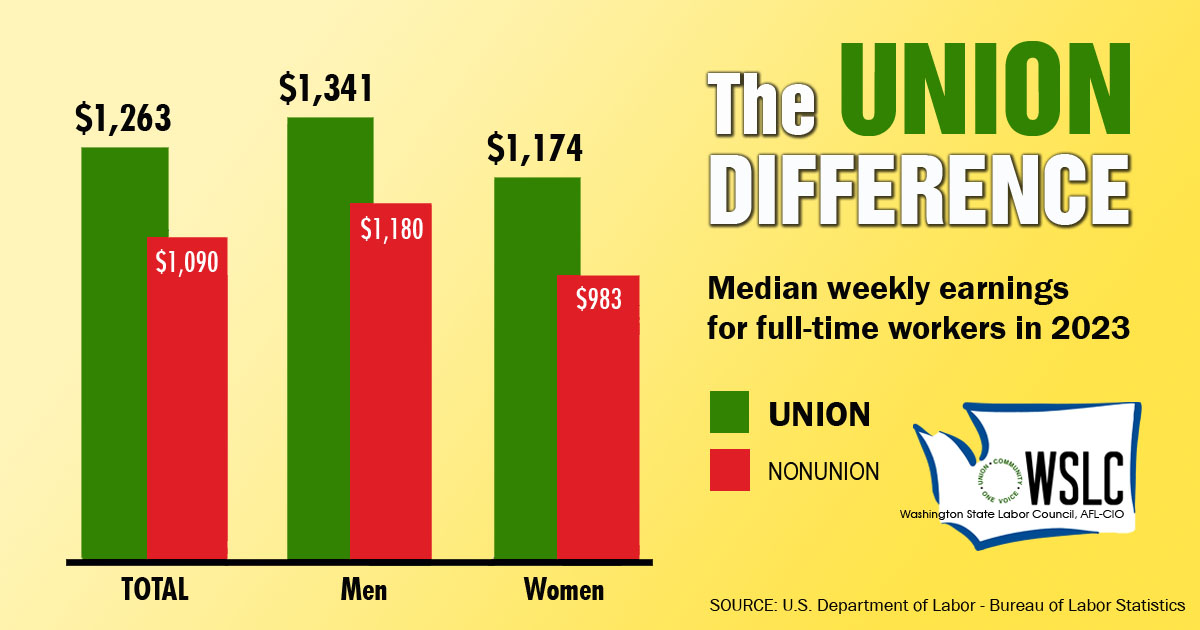
CHECK OUT THE UNION DIFFERENCE in Washington: higher wages, affordable health and dental care, job and retirement security.
FIND OUT HOW TO JOIN TOGETHER with your co-workers to negotiate for better wages, benefits, and a voice at work. Or go ahead and contact a union organizer today!