ELECTION
Election analysis: 86% of WSLC-endorsed candidates lead
In Washington state, union volunteers turned out voters to flip 10 legislative seats, elect pro-worker candidates in both parties, and break the East/West partisan divide
by OSTA DAVIS
(November 10, 2026) — A week out, the election dust has settled for all but the one or two contests where vote margins shift with the late returns.
During the 2026 cycle, delegates at the Washington State Labor Council, AFL-CIO Committee on Political Education (COPE) Convention endorsed 121 candidates and opposed three initiatives. Currently, 86% of WSLC-endorsed candidates are leading in their races, and 2/3 initiatives have failed.
The WSLC prioritized statewide mobilization, hosting events in urban, rural, and suburban communities—from Wenatchee to Bremerton, Vancouver to Spokane, Redmond, Mount Vernon, and Olympia, to name a few. In total, WSLC’s Labor Neighbor grassroots political program hosted 40 doorbelling and phonebanking events and activated 625 union volunteers.
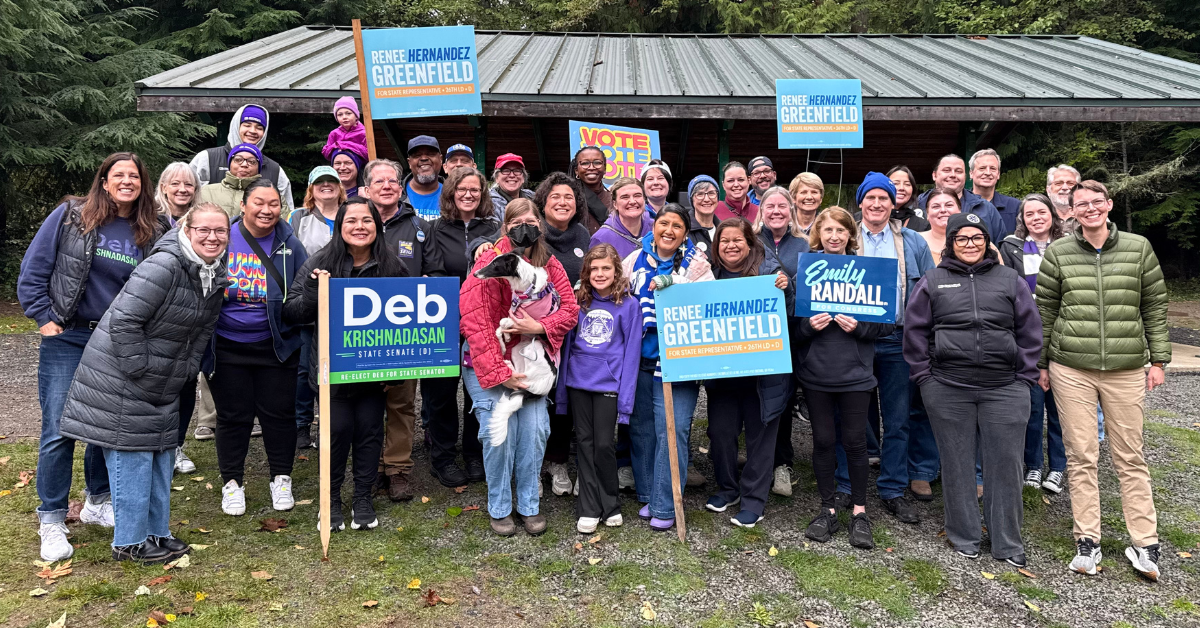
Davis (right) with union volunteers at a doorknocking event in Port Orchard. Photo: WSLC
These tens of thousands of conversations, paired with election results, have yielded the following takeaways:
Voters put their pocketbooks over partisanship.
Washingtonians said ‘No’ to the repeal of the millionaires’ tax in a vote that crossed party lines, with 20 out of 39 counties opposing the initiative. Similarly, union candidates running as Democrats in Republican districts galvanized voters, flipping 10 state legislative seats from red to blue and handing the Democrats a supermajority in the State House.
Voters want results.
History didn’t repeat itself for voters in southwest, central, and eastern Washington. In 2024, the Congressional District 5 race had Michael Baumgartner beating Carmela Conroy with 60.6% of the vote. Fast forward to 2026, we have the same matchup, but Baumgartner’s support has dropped by nearly nine points. While the race has been called in his favor, the cratering of support for an elected official whose public service predates the 2016 election of Donald Trump captures the backlash over rubber-stamp politicians. In Central Washington’s LD 14, Chelsea Dimas gained 12 points from 2024 in her face-off against Gloria Mendoza to win the seat. In LD 17, Deken Letinich was likewise victorious, gaining over 9 points running in the same district as 2024 though in a different seat.
Voters trust unions.
When the differences between candidates become more difficult to parse out, voters largely side with the labor-supported candidate. In the seventeen races where two candidates of the same party advanced through the Primary Election, the WSLC-endorsed candidate is ahead in 16/17 of these contests. Labor support provided credibility for incumbents facing challengers. In areas where the WSLC endorsed challengers, challengers used labor support to create a wedge, particularly in areas such as LD 29 and 48 where the incumbent voted against the millionaires’ tax. On the Republican side, labor support became a buffer against extremism, such as when WSLC-endorsed Mike Steele beat pastor Adam James in LD 12.
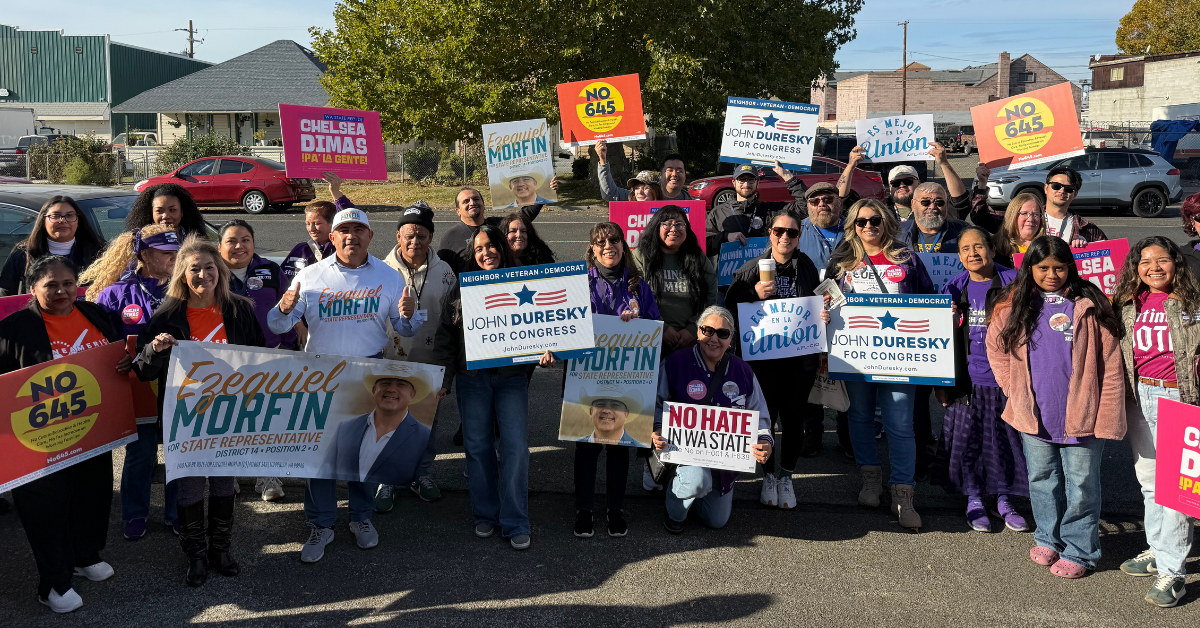
Union volunteers at a doorknocking event in Yakima. Photo: WSLC
Beyond the WSLC endorsements, union workers—nurses, educators, caregivers, and grocery workers—became the key validators opposing the statewide initiatives.
2026 was the year of the pivot. When postal delays presented a problem for vote-by-mail, voters pivoted to drop boxes. When structural tax reform was on the table, voters opted for pivotal change. The East/West partisan divide crumbled to meet the moment and secured historic wins for candidates in unexpected places.
Questions around constitutionality remain as it relates to the millionaires’ tax and school sports ban for trans girls. For many families, the passage of I-638 leads to more painful questions—Will my child be targeted? Should my family put down roots? Do I belong?
The WSLC is a member of the No Hate in Washington State coalition and will continue to share resources, including this FAQ document: I-638 What Happens Next.
Author Annie Dillard passed away this fall, and I find her description of writing to be most analogous to campaigning. Dillard writes, “One of the few things I know about writing is this: spend it all, shoot it, play it, lose it, all, right away, every time.” Thank you to the organizers who spent it all this election cycle and every time. Their dazzlingly relentless effort is the only reason this election cycle has expanded the boundaries of what’s possible.
Osta Davis is Political & Strategic Campaigns Director at the Washington State Labor Council, AFL-CIO. 



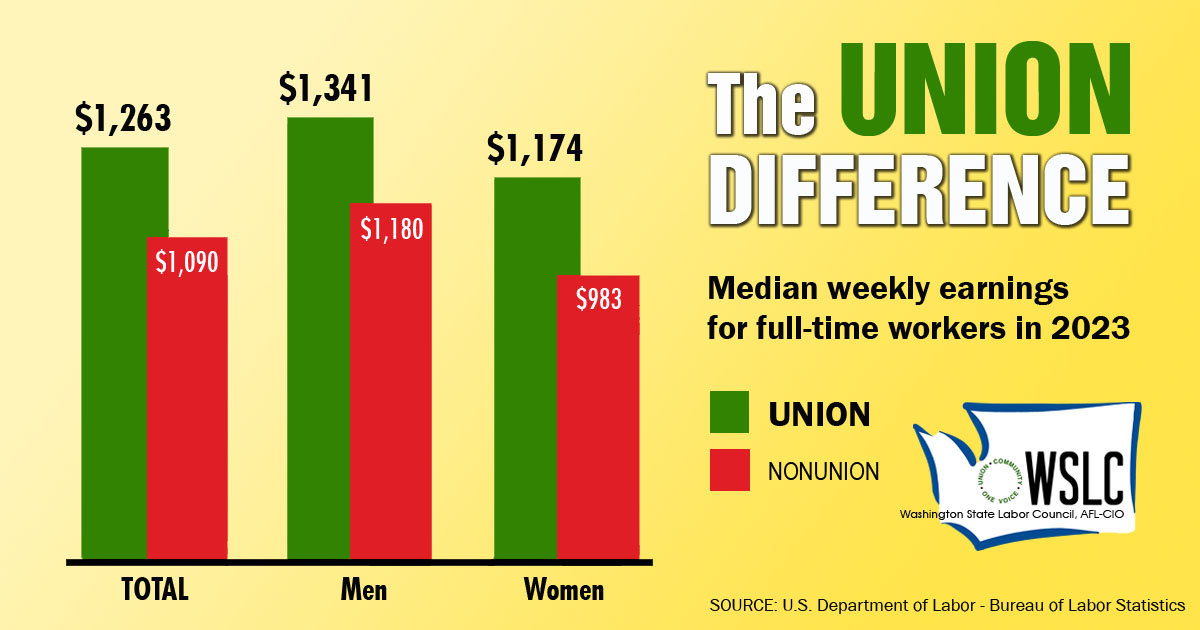
CHECK OUT THE UNION DIFFERENCE in Washington: higher wages, affordable health and dental care, job and retirement security.
FIND OUT HOW TO JOIN TOGETHER with your co-workers to negotiate for better wages, benefits, and a voice at work. Or go ahead and contact a union organizer today!